
JAXPORT Closes 2026 with Holiday Message to Regional Partners
The seaport authority issued year-end greetings to the businesses, logistics operators, and community members who underpin Northeast Florida's maritime economy.
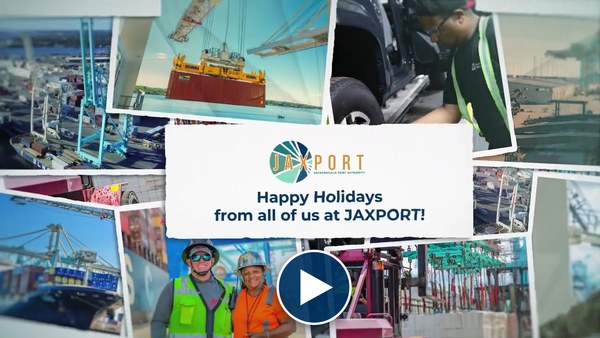
The Jacksonville Port Authority published a year-end holiday message on November 24, 2026, thanking the network of partners, customers, and community members who support the seaport's operations. The brief statement, posted to the port authority's website, acknowledged the people behind every vessel arrival, cargo movement, and job tied to Northeast Florida's maritime economy as 2026 draws to a close.
"From all of us at JAXPORT, we wish you a joyful holiday season and smooth sailing in the New Year," the JAXPORT team wrote in the message. The greeting was accompanied by a holiday card graphic on the port's cargo blog.
What the message signals
The holiday statement offers no operational updates, financial figures, or project announcements. Instead, it underscores the seaport's role as a regional economic anchor and the web of relationships required to sustain port activity in Duval County.
JAXPORT is a city-owned seaport authority and one of the largest cargo hubs on the South Atlantic coast. The port moves automobiles, containerized goods, bulk commodities, and breakbulk cargo through terminals on the St. Johns River and Blount Island. The authority does not operate vessels or employ longshoremen directly; rather, it leases terminal facilities to private operators, coordinates vessel calls, and invests in infrastructure—dredging, berths, cranes, rail connections—that enable cargo to flow.
The message was posted as a brief "Cargo Blog" entry and dated November 24, 2026, the week of the Thanksgiving holiday in the United States. No supplementary details about 2026 cargo volumes, vessel counts, or employment statistics were included in the release.
The network behind port operations
A functioning seaport depends on a layered ecosystem of businesses and workers. Shipping lines schedule vessel calls; terminal operators load and unload cargo; trucking companies and railroads move containers and vehicles inland; freight forwarders and customs brokers handle paperwork; ship pilots and tugboat crews navigate vessels through the river channel; longshoremen, crane operators, and mechanics work the berths and equipment.
JAXPORT's reference to "partners, customers and community members" encompasses that breadth. Terminal tenants such as SSA Jacksonville, TraPac, and automobile processors operate under long-term leases with the port authority. Logistics firms, warehouse operators, and distributors in the Northside industrial corridor and Cecil Commerce Center rely on steady cargo throughput. Regional manufacturers and agricultural exporters use the port to reach overseas markets.
The seaport also generates indirect employment: truck drivers, marine suppliers, ship chandlers, maintenance contractors, and the restaurants and service businesses that support port-area workers. JAXPORT has long cited economic-impact studies estimating that port activity supports tens of thousands of jobs across Northeast Florida, though the holiday message did not cite a specific figure.
Why the port matters to the regional economy
JAXPORT is a critical piece of Jacksonville's economic identity. The deep-draft shipping channel on the St. Johns River—maintained at 47 feet following a federally funded deepening project completed in recent years—allows the port to handle the largest container ships and vehicle carriers calling the U. S. East Coast. That capacity, combined with extensive on-dock rail service and direct interstate highway access, positions Jacksonville as a logistics gateway for the Southeast.
Cargo volume trends at JAXPORT directly affect the demand for warehouse and distribution space in Duval and Clay counties, truck traffic on I-95 and I-295, and the job market for hourly logistics and industrial workers. When the port wins a new shipping-line service or a major automotive import contract, the ripple effects can be measured in new freight-forwarding offices, expanded trucking fleets, and additional shifts at nearby distribution centers.
The port authority is also a major capital investor. JAXPORT's board approves multimillion-dollar projects for terminal expansions, crane purchases, berth improvements, and dredge-spoil management. Those investments, funded by port revenues and sometimes federal grants, shape the competitive position of Jacksonville's seaport relative to Savannah, Charleston, and other Southeastern ports.
Local governments and economic-development agencies treat JAXPORT's health as a leading indicator of regional growth. A thriving port attracts logistics real estate developers and manufacturers seeking proximity to international shipping. Conversely, shifts in global shipping alliances, tariff regimes, or carrier route networks can quickly alter cargo flows and the businesses that depend on them.
Community and environmental dimensions
The "community members" mentioned in JAXPORT's message include residents of the Northside neighborhoods adjacent to port terminals and the broader public that benefits from port-generated tax revenue and economic activity. Port operations inevitably raise community concerns: truck traffic on Heckscher Drive and Talleyrand Avenue, air emissions from ships and cargo-handling equipment, dredging impacts on the St. Johns River, and the land-use balance between industrial expansion and residential quality of life.
JAXPORT has invested in emission-reduction programs in recent years, including shore-power infrastructure that allows docked vessels to plug into the electrical grid rather than run auxiliary diesel engines, and incentives for cleaner cargo-handling equipment. Environmental permits for channel dredging and terminal expansions typically require coordination with state and federal agencies to address impacts on water quality, wetlands, and submerged resources.
The port authority's relationship with the community also extends to workforce development. JAXPORT and its terminal operators periodically partner with local colleges, trade schools, and job-training programs to prepare workers for maritime and logistics careers. These initiatives matter in a region where the supply of skilled labor can constrain the growth of port-dependent industries.
Context: A year-end tradition
Holiday greetings from public agencies and infrastructure operators are routine, but they also serve as a moment to take stock. For JAXPORT, the close of 2026 caps a period of continued growth in Northeast Florida's logistics sector. The region has seen a surge of warehouse and distribution-center construction near the port and along the Interstate 95 corridor, driven by e-commerce demand, nearshoring trends, and the port's expanding container business.
The authority's board meetings throughout the year have covered topics including berth rehabilitation schedules, negotiations with shipping lines, capital budget allocations, and economic incentive agreements with terminal operators. Each of those decisions shapes the port's ability to compete for cargo and, by extension, the volume of freight moving through Duval County.
While the November 24 message offered no new operational data, JAXPORT typically releases annual cargo statistics and tonnage reports in the first quarter of the following year. Those figures will provide a fuller picture of how 2026 unfolded for the port and what trends may carry into 2027.
What happens next
No specific board meetings, votes, or public comment periods are tied to the holiday message. JAXPORT's board of directors meets monthly, and agendas are posted in advance on the authority's website. Upcoming sessions in early 2027 are likely to include year-end financial reports, updates on ongoing terminal projects, and preliminary discussion of the capital budget for the new fiscal year.
Residents and businesses interested in port operations can monitor board agendas and minutes through JAXPORT's public website. The port authority also publishes its strategic plan, which outlines multi-year priorities for cargo growth, infrastructure investment, and environmental stewardship.
As 2027 begins, the broader trajectory of Northeast Florida's port economy will depend on factors both local and global: federal infrastructure funding, international trade policy, shipping-line alliance decisions, and the pace of industrial real estate development in the port's hinterland. JAXPORT's ability to navigate those dynamics—and to maintain the relationships the holiday message acknowledged—will shape the region's standing as a logistics hub in the years ahead.
Sources
- JaxPort: Happy Holidays from JAXPORT