
Overbuilding, road changes dominate Ponte Vedra town hall
St. Johns County Commissioner Krista Joseph addressed residents at The Plantation at Ponte Vedra Beach on September 17, fielding questions about growth pressures, infrastructure, and a homestead exemption ballot measure.
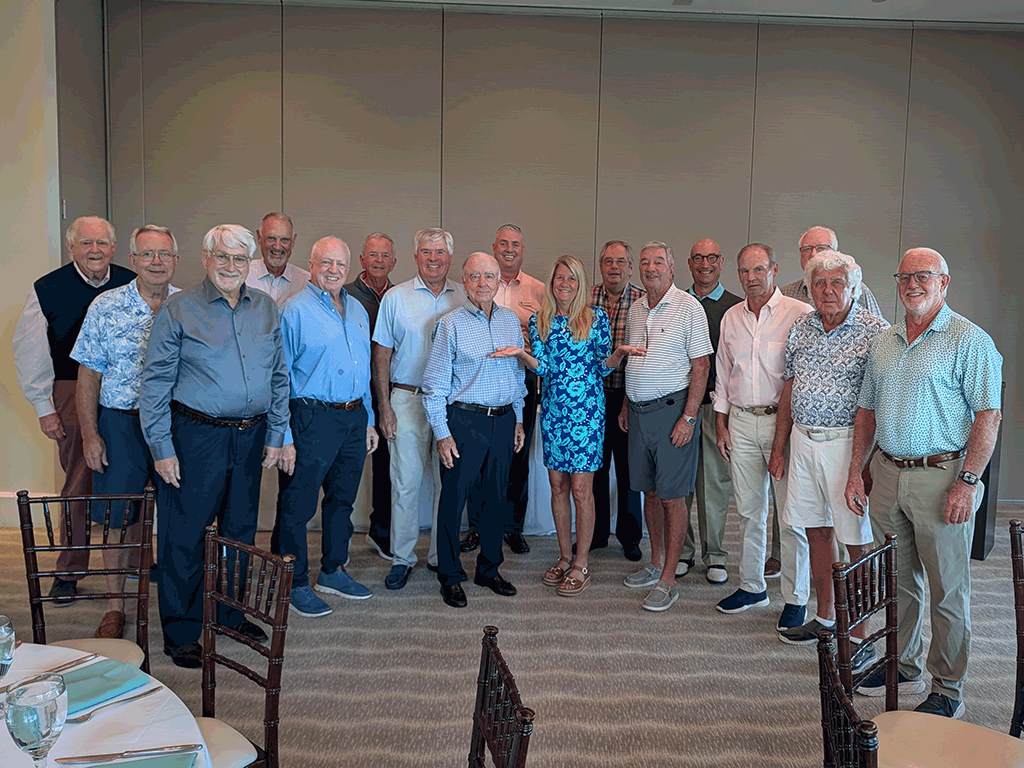
St. Johns County Commissioner Krista Joseph spent an evening in mid-September answering hard questions about growth from residents at The Plantation at Ponte Vedra Beach, tackling topics that echo across the county's northern corridor: how to deal with overbuilding, what road changes are coming to Ponte Vedra, and the implications of a homestead exemption ballot measure.
Joseph, who represents District 4 in the northern portion of St. Johns County, spoke to the Plantation Croquet Discussion Group on September 17, 2026, by invitation. The session covered Amendment 3 and proposed changes to homestead exemptions, how the county is responding to development pressures, planned Ponte Vedra road changes, and what organizers called "the e bike issue. "
What happened at the meeting
The September 17 gathering at The Plantation at Ponte Vedra Beach brought together members of the community's croquet program — described by the county as one of the most distinctive in Northeast Florida — with their District 4 commissioner. According to a recap published by St. Johns County on September 30, the discussion focused on four key topics: Amendment 3 and homestead exemption changes, dealing with overbuilding, Ponte Vedra road changes, and e-bike regulation.
"On behalf of the Plantation Croquet Discussion Group, I want to thank you for an enlightening and fun evening. We all enjoyed the moving talk about your family and two courageous sons. I thought there was excellent discussion about the topics," Tim Cavers, a participant, said in the county's summary. Joseph, a mother of five including two U. S. Navy SEALs, is a frequent speaker to local organizations.
District 4 covers the northern portion of St. Johns County, an area that includes Ponte Vedra Beach and stretches toward the Duval County line. The Plantation at Ponte Vedra Beach is a residential community known for its croquet program, which the county says welcomes players of all ages and skill levels in both casual and competitive formats.
Why overbuilding is a flashpoint in North St. Johns
The "overbuilding" concern raised at the meeting reflects a broader anxiety across St. Johns County, which has been among Florida's fastest-growing counties for years. Residential construction has surged along the CR 210 corridor, in master-planned communities such as Nocatee and SilverLeaf, and along the SR 16 and World Golf Village corridors. In District 4, the northern tier near Ponte Vedra Beach has seen steady infill and redevelopment pressure as land prices rise and buyers seek coastal proximity and top-rated schools.
When residents talk about overbuilding, they typically mean the pace and density of new housing approvals outstripping road capacity, school seats, and the character of established neighborhoods. St. Johns County uses a concurrency management system intended to ensure that infrastructure keeps pace with new rooftops, but the system has been tested by the volume of applications. Rezoning requests, subdivision plats, and large planned-unit developments (PUDs) are reviewed by the county planning and zoning agency and require approval by the Board of County Commissioners.
For homeowners in communities like The Plantation, the practical effects of rapid growth nearby include longer commute times on A1A and CR 210, crowded schools despite new construction, and concerns about stormwater runoff and environmental buffers as vacant parcels are developed. The county has raised impact fees and updated its comprehensive plan in recent years to manage growth, but the political question of how much is too much remains a recurring theme at commission meetings and community forums.
What Ponte Vedra road changes mean for residents
Joseph's discussion of "Ponte Vedra road changes" likely refers to projects on the Florida Department of Transportation's District 2 work program or county capital plans affecting the area. Ponte Vedra Beach and its inland neighborhoods are served primarily by A1A (SR A1A), CR 210, and a network of collector roads. Both A1A and CR 210 are chronic congestion points, especially during peak hours and beach season.
FDOT has studied widening and intersection improvements along A1A south of the Duval County line for years, and St. Johns County has programmed road extensions and turn-lane additions on CR 210 and its feeder roads to accommodate growth. Road projects in this area typically involve right-of-way acquisition, utility relocations, and coordination with JEA for water and sewer lines. Construction can take two to three years from design to ribbon-cutting, and residents along the corridor often face detours, driveway access changes, and construction noise.
The specific projects Joseph discussed were not detailed in the county's September 30 recap, but road changes in Ponte Vedra tend to center on capacity and safety: adding turn lanes at subdivision entrances, extending sidewalks and multi-use paths (a priority in the county's transportation element), and resurfacing aging pavement. Residents watching for details should monitor FDOT District 2 public meetings and the county's five-year capital improvement program, both of which list projects, timelines, and funding sources.
Amendment 3 and the homestead exemption question
Amendment 3, as discussed at the meeting, refers to a ballot measure affecting Florida's homestead exemption. The homestead exemption reduces the taxable value of a primary residence by up to $50,000 for property-tax purposes — the first $25,000 applies to all property taxes, and the second $25,000 applies to non-school taxes. Any change to the exemption structure can shift the property-tax burden among homesteaded residents, non-homesteaded properties (including second homes and rentals), and commercial parcels.
In a high-growth county like St. Johns, where property values have appreciated rapidly, homestead exemptions and the Save Our Homes cap (which limits annual assessed-value increases to 3% for homesteaded properties) are significant pocketbook issues. A broader or higher exemption can lower taxes for existing residents but may require higher millage rates to fund the same level of county and school services, shifting costs to new buyers, businesses, and investors. Conversely, tightening exemptions or raising eligibility thresholds can increase revenue stability but provoke voter backlash.
The discussion of Amendment 3 at the September 17 meeting suggests residents wanted to understand how the measure would affect their tax bills and county finances. Joseph's role as a commissioner includes setting the county's millage rate each year during budget hearings, a process that directly ties property-tax policy to growth management, since new development adds to the tax base but also demands roads, schools, parks, and emergency services.
The e-bike question in residential communities
The "e bike issue" mentioned in the meeting recap is a growing topic in Florida's suburban and resort communities. Electric bicycles — which can reach speeds of 20 to 28 mph depending on the class — have become popular for recreation and short-trip transportation, but their use on multi-use paths, neighborhood streets, and golf-cart paths has raised safety and regulatory questions.
In St. Johns County, e-bikes are governed by Florida Statutes Chapter 316, which classifies them into three classes based on speed and throttle type, and generally treats them as bicycles rather than motor vehicles. However, homeowners' associations, master-planned communities, and local governments can impose additional restrictions on where e-bikes are allowed. Concerns in gated communities like The Plantation often center on speed, noise (though e-bikes are quieter than gas scooters), and conflicts with pedestrians and traditional cyclists on shared paths.
The county has been updating its multi-use path and trail network as part of its mobility plan, and e-bike access and safety rules are part of that conversation. Residents and commissioners are weighing whether e-bikes should be allowed on all paths, restricted to certain classes, or subject to helmet and age rules beyond state minimums. The outcome will shape how residents move around neighborhoods and connect to schools, parks, and commercial areas without cars.
What happens next
Commissioner Joseph's September 17 meeting was part of an ongoing series of community engagements across District 4. The county's recap encourages residents to stay informed by subscribing to St. Johns County e-newsletters and following updates on the county's strategic plan through the Office of Public Affairs.
For residents tracking the issues raised at The Plantation, the key forums are Board of County Commissioners meetings, held twice monthly at the county administration building in St. Augustine, and the planning and zoning agency meetings where rezoning and development applications are first reviewed. Agendas, staff reports, and video archives are available on the county website. Amendment 3, if it advances to a referendum, will appear on a future ballot with a full text and fiscal-impact statement.
Road projects in the Ponte Vedra area will move through FDOT's public-involvement process, which includes design meetings and comment periods before construction begins. E-bike regulations, if the county pursues changes beyond state law, would come through an ordinance process involving public hearings before the commission.
The September 17 discussion at The Plantation underscores a reality across Northeast Florida: even in affluent, established neighborhoods, growth is no longer something happening somewhere else. As St. Johns County absorbs its share of the region's population surge — drawn by schools, jobs, and relative affordability compared to coastal markets farther south — the built environment is changing fast, and residents are showing up to ask their elected officials how the county plans to manage it.
For Commissioner Joseph and her colleagues, the challenge is balancing the tax base and economic vitality that new development brings against the infrastructure capacity, environmental limits, and community character that existing residents expect the county to protect. That negotiation, played out one subdivision plat and road project at a time, will define North St. Johns County for the next decade.
Sources
- St. Johns County: Plantation Croquet Discussion Group