Palm Coast eyes 35-year YMCA lease for 44,000-sq. -ft. recreation center
City administration will present a proposed lease agreement for a new facility at 1580 Central Avenue with a pool, gym, wellness center, and childcare space.
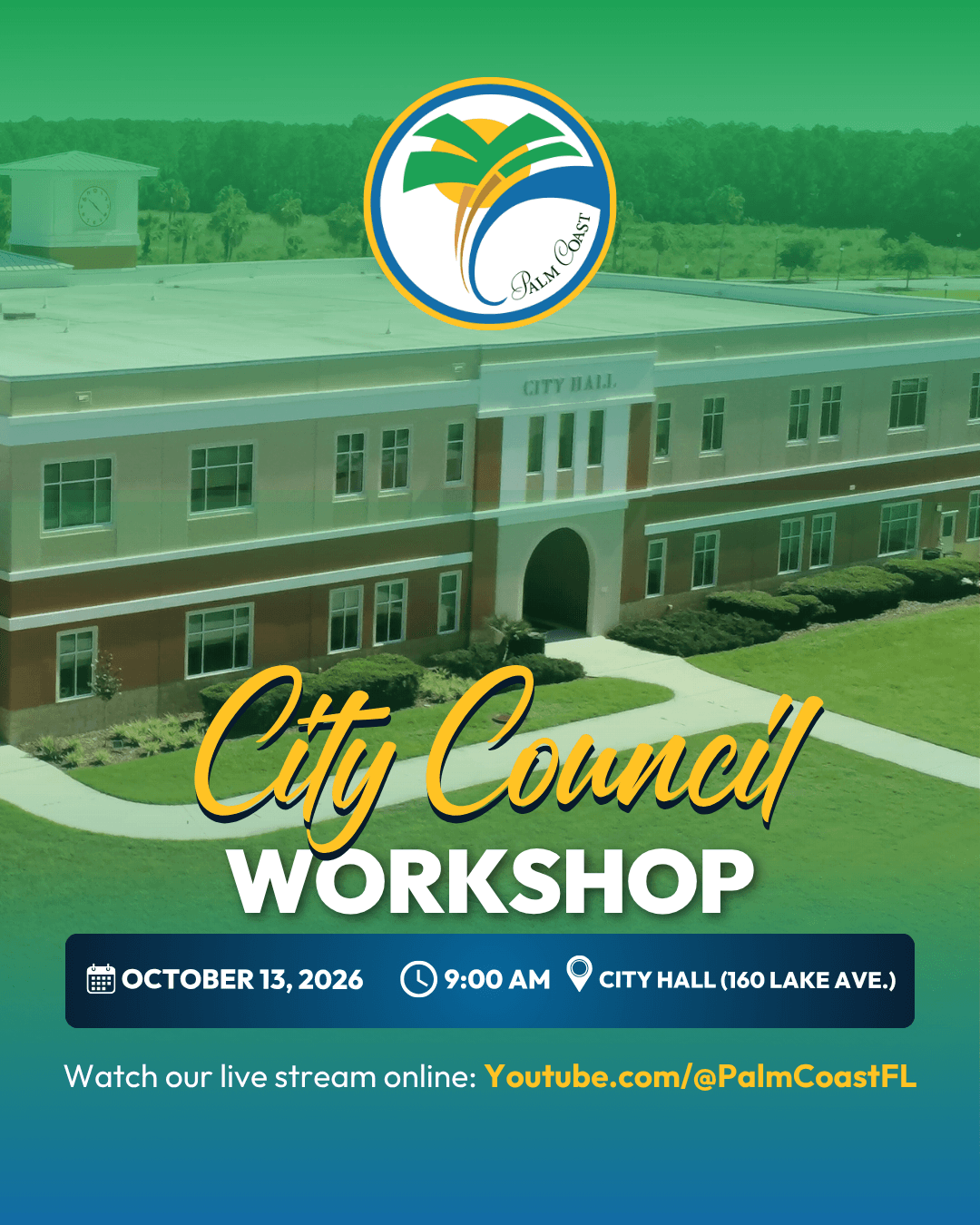
Palm Coast is moving toward a major expansion of its recreation infrastructure, with city administration set to present a proposed 35-year lease agreement that would enable the YMCA to build and operate a new 44,000-square-foot facility on city-owned land. The proposal will be discussed at the City Council workshop meeting Tuesday, October 13, at 9 a. m.
The lease would cover land at 1580 Central Avenue and allow the Volusia/Flagler Family Young Men's Christian Association, Inc. to construct, own, and operate a comprehensive recreation center that includes a pool, gym, wellness center, childcare space, and other amenities. The workshop presentation marks the first public airing of the deal structure as the city and the nonprofit work to finalize terms.
What's happening
According to the meeting agenda released by the City of Palm Coast, the city administration is negotiating a lease agreement with the Volusia/Flagler Family YMCA for property located at 1580 Central Avenue. The proposed lease term is 35 years.
Under the agreement, the YMCA would be responsible for building, owning, and operating the new facility. The planned recreation center would span approximately 44,000 square feet and include a pool, gym, wellness center, childcare space, and additional amenities not yet detailed in public documents.
The lease proposal is one of three presentations scheduled for the October 13 workshop. The meeting will also cover a comprehensive compensation and benefits survey for city employees—approved by the council in April 2026 and conducted by Evergreen Solutions, LLC—and a resolution to approve cultural arts grants for fiscal year 2026–2027 in partnership with the Flagler County Cultural Council.
The workshop is open to the public, with public comment periods at the beginning and end of the meeting. Each comment period is limited to 30 minutes, with individual speakers allowed up to three minutes at the podium. The meeting will be streamed live on the City of Palm Coast's YouTube channel.
What this means for Palm Coast residents
If approved, the YMCA facility would represent one of the largest additions to Palm Coast's recreation landscape in recent years. A 44,000-square-foot center is substantially larger than typical neighborhood parks or single-purpose facilities, and the inclusion of a pool, gym, wellness programming, and childcare under one roof would provide a one-stop hub for families.
For residents currently driving to Flagler County's other YMCA locations or paying for private gym memberships, the Central Avenue site could offer a closer, potentially more affordable option. YMCAs typically operate on a membership model with sliding-scale fees and financial assistance programs, though specific pricing for the Palm Coast facility has not been disclosed.
Childcare is a recurring pressure point in fast-growing Flagler County. The inclusion of childcare space in the facility design suggests the YMCA may offer before- and after-school programs, summer camp, or early-childhood care—services that working parents in the area have consistently sought. The specifics of the childcare offering and its capacity will be key details to watch as the lease terms are finalized.
The location at 1580 Central Avenue places the facility in a central corridor of Palm Coast, which has seen steady residential and commercial development. Central Avenue runs east-west across the city, connecting the Palm Coast Parkway commercial spine with residential neighborhoods to the east and west. A recreation facility on that corridor would be accessible to a broad swath of the city's population, though traffic patterns during peak drop-off and pick-up times—especially if the childcare component is large—could become a factor for nearby residents.
Financial structure and who pays
The lease structure is critical to understanding the project's financial and operational implications for the city. Under the proposed agreement, the YMCA—not the city—would build, own, and operate the facility. This means the YMCA would be responsible for securing financing, managing construction, and covering ongoing operational costs including staffing, maintenance, utilities, and programming.
For Palm Coast, the deal represents a way to expand public recreation capacity without issuing bonds or tapping general-fund capital reserves. The city's cost is primarily the foregone value of leasing the land at 1580 Central Avenue for 35 years, though the lease terms—including whether the YMCA will pay rent, what responsibilities each party has for site improvements, and how the land reverts at the end of the term—have not been disclosed in the agenda materials.
In similar YMCA-municipal partnerships across Florida, lease agreements often include nominal or below-market rent in exchange for public-benefit commitments such as free or subsidized memberships for low-income residents, reserved hours for city programming, or facility-use agreements for local schools. Whether the Palm Coast deal includes such provisions will be a key question during the workshop discussion.
The 35-year lease term is long by municipal standards but typical for projects requiring significant private capital investment. A lease of that length gives the YMCA time to amortize construction debt and stabilize operations, while the city retains ownership of the underlying land. At the end of the term, the parties would need to negotiate an extension, a buyout, or a transfer of the facility depending on the lease language.
Infrastructure, permitting, and site considerations
A 44,000-square-foot recreation facility with a pool is a utility-intensive project. The site will require substantial water and sewer capacity—both for daily operations and for the pool's fill, filtration, and chemical treatment systems. Palm Coast's utility system is managed in-house by the city, so service extensions or capacity upgrades would typically be coordinated through the Public Works and Utilities departments.
Stormwater management will also be a material consideration. A building and parking lot of this scale generate significant impervious surface area, and Flagler County's low topography and proximity to coastal wetlands mean that stormwater retention and treatment ponds are standard requirements. The site at 1580 Central Avenue would need to meet St. Johns River Water Management District stormwater standards and city land-development regulations.
Permitting will involve multiple layers. The YMCA will need to secure site-plan approval from the city's planning and development department, building permits, health-department approval for the pool and childcare components, and likely a St. Johns River Water Management District environmental resource permit if wetlands or significant stormwater infrastructure are involved. The city's role as both landlord and permitting authority creates a potential streamlining opportunity, though all applicable codes and environmental rules would still apply.
Traffic impact is another variable. YMCAs typically see peak arrival and departure traffic in the early morning (before-work gym users), mid-afternoon (after-school childcare pickup), and early evening (family swim and fitness classes). If the facility draws several hundred daily visits—common for a center of this size—the Central Avenue corridor and adjacent intersections would see increased trip generation. A traffic-impact analysis is typically required for projects of this scale under Florida's concurrency rules, and any needed turn lanes or signal upgrades would be negotiated between the YMCA, the city, and the Florida Department of Transportation if state roads are affected.
What happens next
The October 13 workshop is a discussion session, not a voting meeting. City administration will present the proposed lease terms, and council members will have the opportunity to ask questions, request additional information, and provide direction to staff. Public comment will be taken at the beginning and end of the workshop, giving residents a chance to weigh in on the proposal.
If the council is supportive, the next step would typically be for staff to finalize the lease agreement and bring it back to a formal business meeting for a vote. The City Council's next scheduled business meeting is October 20, 2026, at 9 a. m., though the YMCA lease may not appear on that agenda depending on how quickly negotiations proceed.
Before any construction can begin, the YMCA would need to complete the permitting process, secure financing, and finalize design and engineering. For a project of this size and complexity, that process typically takes several months to more than a year. Groundbreaking would follow permits, with construction of a facility this large often taking 12 to 18 months.
Residents who want to follow the proposal can watch the October 13 workshop live on the city's YouTube channel or review the agenda and supporting materials on the city's website. Written comments can be submitted to the City Clerk's Office at 386-986-3713, and residents are encouraged to attend the workshop in person to speak during public comment if they have questions or concerns about the project.
Broader growth context
The YMCA proposal is the latest in a string of quality-of-life infrastructure projects in Palm Coast, a city that has added thousands of residents over the past decade as Flagler County's population growth accelerated. The city has worked to keep pace with demand for parks, recreation programming, and community gathering spaces, often leveraging partnerships with nonprofits and private operators to expand capacity without shouldering the full capital cost.
Flagler County remains one of the faster-growing counties in Northeast Florida, with new subdivisions, commercial corridors, and institutional projects reshaping the landscape. Recreation and childcare infrastructure are recurring gaps cited by residents and economic-development officials as the county matures from a retirement destination into a full-spectrum community. A major YMCA facility would help address both gaps, particularly if the childcare component is scaled to meet demand.
For the YMCA, the Palm Coast facility would expand its footprint in the Volusia-Flagler market and position the organization as a anchor institution in a growing city. For Palm Coast, the deal represents a bet that a long-term public-private partnership can deliver amenities that enhance livability and help the city compete for families and young professionals in a crowded regional growth market.
Sources
- City of Palm Coast: City Council Workshop Meeting on Tuesday, October 13, 2026, at 9:00 a. m.