Palm Coast to vote on $534M budget, 4. 14 millage rate Sept. 23
The Palm Coast City Council will consider a $533. 9 million fiscal-year 2027 budget and set a property-tax rate during a public meeting next week, with a separate $4 million redevelopment fund for the SR 100 corridor also on the agenda.
The Palm Coast City Council will vote next week on a $533. 9 million budget for fiscal year 2026-2027 and set the city's property-tax millage rate at 4. 1387, marking one of the most consequential spending decisions of the year for Flagler County's largest municipality.
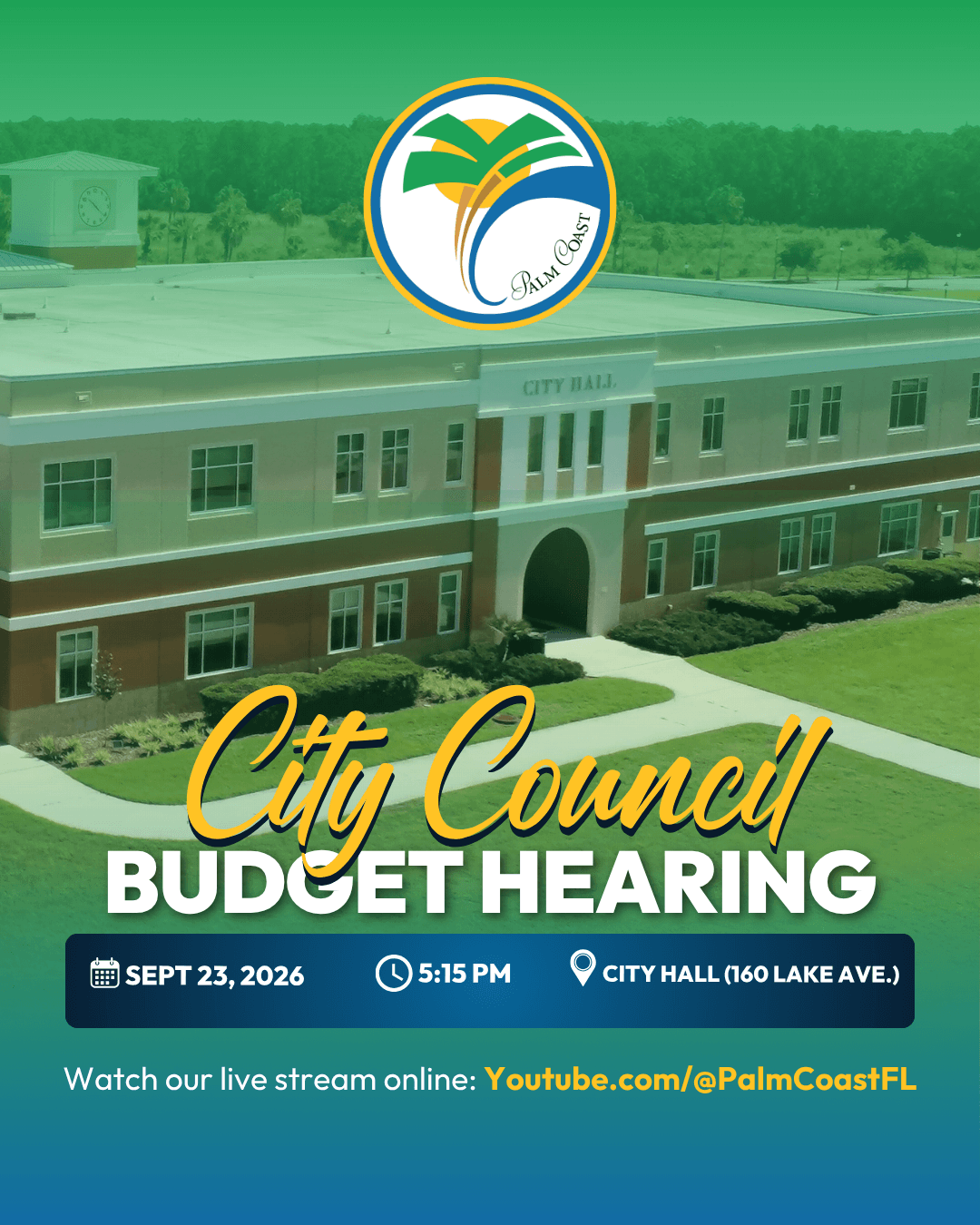
The public hearing and final votes are scheduled for Wednesday, September 23, 2026, at 5:15 p. m. at Palm Coast City Hall. The meeting will also include adoption of a separate $4 million redevelopment budget for the SR 100 corridor and approval of a $4. 3 million fleet-replacement program that would purchase 112 new vehicles and pieces of equipment for city operations.
What's happening
The city's Finance Department will present the final proposed Fiscal Year 2026-2027 budget totaling $533,947,885 and recommend adoption of a millage rate of 4. 1387 mills, according to the Sept. 23 meeting agenda posted by the city. A mill is one dollar of tax per $1,000 of taxable property value; the proposed rate would generate $4. 14 in city property taxes per $1,000 of assessed value.
During the meeting, the council will recess and convene as the State Road 100 Community Redevelopment Agency Board to adopt the SR 100 Corridor CRA final budget of $4,003,956 for fiscal year 2026-2027. Community redevelopment agencies in Florida are special districts authorized to use property-tax-increment revenue within a defined blighted or slum area to fund improvements and incentivize private investment.
After reconvening as the city council, members will vote on three resolutions: adopting the 4. 1387 millage rate, adopting the $533. 9 million city budget, and approving the fiscal-year 2027 fleet replacement and purchase program. The city evaluated 368 assets—vehicles and equipment used across departments—and staff recommend replacing 112 of them at a total cost of $4,260,065, according to the agenda.
Public comment will be opened at the beginning and end of the meeting, with each speaker allowed up to three minutes. Non-agenda public comments will be limited to 30 minutes at the start and conclusion of the session, per city policy and Florida Statutes Section 286. 0114.
What the budget means for property owners
The proposed 4. 1387 millage rate is the figure that will translate directly into city property-tax bills for Palm Coast homeowners and commercial property owners. For a home with a taxable assessed value of $250,000—after homestead exemption and any other exemptions are applied—the city portion of the annual property-tax bill would be approximately $1,035. A $350,000 taxable-value home would generate roughly $1,449 in city taxes under the proposed rate.
Florida property owners pay combined taxes to multiple overlapping taxing authorities: the county, the school district, the city (if incorporated), water-management districts, and sometimes special districts. The city millage is one component of the total tax bill. The proposed rate does not include Flagler County's millage, the Flagler County School Board's rate, or other levies, which are set separately.
Property-tax revenue is a major funding source for municipal services including roads, parks, stormwater, code enforcement, and public safety. Changes to the millage rate affect how much of the city's operating and capital expenses are borne by property owners versus other revenue streams such as utility fees, grants, and state-shared revenues. Homeowners with a Save Our Homes cap on their assessed-value increases will see smaller year-over-year tax changes than recent buyers or commercial property owners, whose assessments can rise faster.
How the money will be spent
While the meeting agenda does not provide a detailed breakdown of the $533. 9 million budget, city budgets of this scale typically encompass general-fund operations—police, fire, parks and recreation, administration—as well as enterprise funds for utilities (water, sewer, stormwater), capital projects such as road paving and drainage improvements, and debt service on bonds issued for infrastructure.
One concrete spending item on the agenda is the fleet-replacement program. The city completed its annual review of 368 vehicles and pieces of equipment and identified 112 assets that staff recommend replacing in fiscal 2027. The $4. 26 million price tag for those replacements reflects the cost of maintaining a municipal fleet that supports daily operations—everything from refuse trucks and mowers to police cruisers and Public Works pickups.
Fleet replacement is a routine capital expense, but deferring it can lead to higher maintenance costs, increased downtime, and reduced efficiency. Many Florida cities budget for vehicle and equipment replacement on a multi-year cycle to smooth costs and avoid sudden spikes in capital outlays. The vehicles and equipment purchased under the fiscal-2027 program would be deployed across city departments as older units are retired or auctioned.
The SR 100 corridor redevelopment fund
The $4,003,956 SR 100 Corridor Community Redevelopment Agency budget is a separate pot of money derived from tax-increment financing within the CRA district. Under Florida's CRA law, the increment of property-tax revenue generated by rising assessed values above a frozen base year within the redevelopment area is captured and reinvested in improvements, infrastructure, facade grants, affordable housing, and other projects intended to eliminate blight and spur private development.
State Road 100 is a major east-west corridor in Palm Coast, running from Interstate 95 through the city center toward the coast. CRA funds for this corridor could support streetscape enhancements, utility upgrades, land acquisition, incentives for infill development, or public-private partnership projects. The agenda does not detail how the $4 million will be allocated among specific line items or projects; that breakdown is typically contained in the budget document presented at the meeting.
CRA budgets are adopted by the CRA board, which in Palm Coast's case is composed of the same elected officials who serve on the city council, convened in a separate legal capacity. The separation is procedural: the CRA operates under a distinct statute and its revenue stream is legally ring-fenced for use within the redevelopment area.
What happens next
The Sept. 23 meeting is the final public hearing and vote on the fiscal-year 2027 budget and millage rate. Florida law requires local governments to hold two public hearings on their budgets and tax rates; this meeting represents the second and final hearing before the budget takes effect on October 1, 2026, the start of the new fiscal year.
Palm Coast residents who wish to comment on the budget, millage rate, fleet purchases, or CRA spending may attend in person at City Hall or submit written comments to the City Clerk's Office at 386-986-3713. The meeting will be livestreamed on the city's YouTube channel, and the full agenda and supporting documents are posted at palmcoastgov. com.
Once adopted, the budget will govern city spending and service levels for the 12 months ending September 30, 2027. The city council may amend the budget during the fiscal year through supplemental appropriations if revenues exceed or fall short of projections, or if emergency spending is required.
A Planning & Land Development Regulation Board meeting is scheduled for Sept. 22, 2026, at 5:30 p. m., the evening before the budget vote. That board reviews site plans, subdivisions, and land-use applications—a separate track of city activity that feeds the pipeline of development requiring the roads, utilities, and public-safety capacity funded by the budget the council will consider the following night.
The bigger picture
The nearly $534 million budget underscores the scale of municipal operations in Palm Coast, a city of more than 90,000 residents in northern Flagler County that has grown steadily over the past two decades. As one of the anchoring cities in the First Coast Observer's coverage area, Palm Coast's fiscal decisions ripple through the real-estate market, development community, and regional infrastructure planning.
The SR 100 CRA budget in particular signals ongoing attention to corridor redevelopment and infill, a strategy many Northeast Florida municipalities are pursuing to manage growth pressures and aging commercial strips. How Palm Coast deploys its redevelopment dollars—whether toward utility capacity that unlocks denser projects, aesthetic improvements that attract tenants, or incentives that close financing gaps for private developers—will shape the corridor's trajectory and competitive position within the broader Flagler County market.
For property owners, contractors, and real-estate professionals watching the region's growth, the Sept. 23 vote will set the tax and spending framework that supports or constrains the next year of city services, capital projects, and the business climate. The meeting is open to the public, and residents are encouraged to attend or watch online as the council makes these decisions.
Sources
- City of Palm Coast: City Council Business Meeting on September 23, 2026, at 5:15 p. m.