
Palm Coast Waterfront Park Adds 100 Spaces, Pavilion With $630K State Grant
A 3,600-square-foot pavilion and expanded parking lot opened at the Intracoastal park after a year of construction funded mostly by the Florida Inland Navigation District.
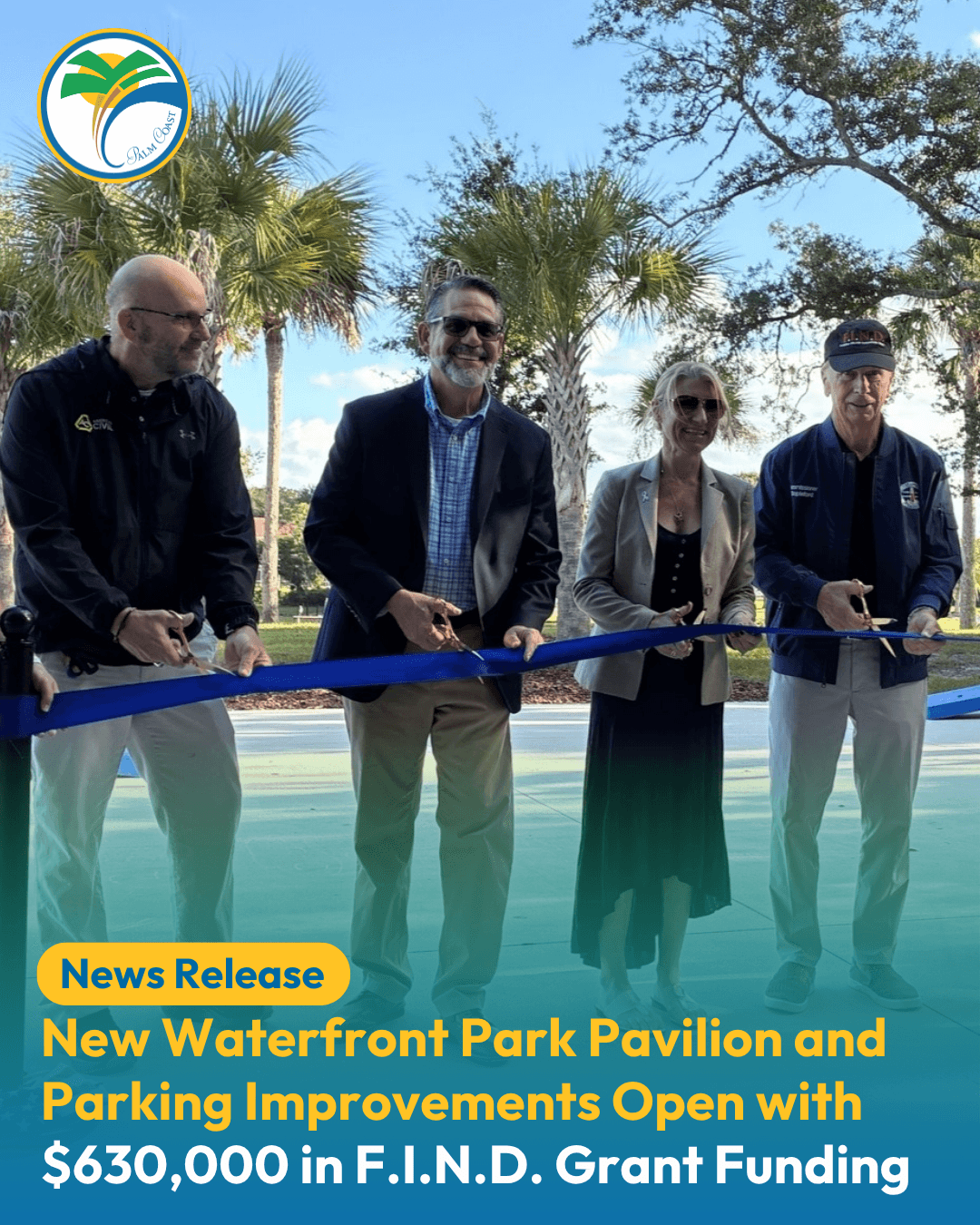
A year-long construction project at one of Palm Coast's most popular parks is complete, doubling down on waterfront access and parking just as the winter season brings more visitors to Flagler County's Intracoastal corridor. The city on October 23 celebrated the opening of a new 3,600-square-foot pavilion and 100 additional parking spaces at Waterfront Park, a $1. 4 million project funded in large part by the state agency that manages Florida's inland waterways.
The Florida Inland Navigation District contributed $629,379 toward the project's total construction cost of $1,406,464. 98, covering approximately 45 percent of the bill. Palm Coast funded the remaining $777,085. 98 through its Recreation Impact Fee Fund—a reserve built from fees paid by developers when new residential construction adds demand for parks and recreation facilities.
What's happening
The improvements center on a new pavilion and parking expansion across approximately 1. 29 acres at Waterfront Park, which sits along the Intracoastal Waterway in eastern Palm Coast. The pavilion provides covered space with picnic tables for families and groups. It was engineered to withstand wind speeds of up to 135 mph and built with pressure-treated southern yellow pine selected for durability in the coastal environment.
The parking expansion added 100 spaces to serve a park that has drawn growing crowds for kayak launches, fishing access, trail use, and community events. American Civil Construction performed the work over roughly one year.
The project is the sixth F. I. N. D. grant awarded to the city for Waterfront Park, bringing the district's total investment in the facility to $1,415,782, according to F. I. N. D. Commissioner Randy Stapleford, who attended the October 23 ribbon cutting. F. I. N. D. 's cumulative economic contribution to Flagler County now totals $335 million, Stapleford said.
Tree preservation shaped the parking layout: the design avoided the four largest existing grandfather oaks in the construction area. Some tree removal was necessary, but the city planted 16 live oaks, 10 slash pines, and 24 cabbage palms, along with additional landscaping and ground cover, to offset the loss. Pedestrian connections were improved throughout the park, including pathways to the kayak launch.
Why parking matters for waterfront access
For a park that serves as Palm Coast's front door to the Intracoastal Waterway, parking capacity directly controls how many residents and visitors can use the water. Waterfront Park offers a public kayak launch, fishing spots, and trails along the waterway—assets that require users to bring gear, coolers, and sometimes trailers. Without enough spaces, cars overflow onto adjacent streets or users give up and leave, especially during peak weekend mornings and community events.
The 100 new spaces arrive as Flagler County continues to add population. Palm Coast grew by roughly 15 percent between 2020 and 2023, according to U. S. Census estimates, and remains one of the faster-growing small cities in Northeast Florida. That growth concentrates along the SR 100 and Old Dixie Highway corridors near the coast, putting Waterfront Park within a short drive of thousands of newer homes.
The city explicitly funded its share of the project from recreation impact fees—charges levied on residential developers to ensure new subdivisions contribute toward the parks and facilities their residents will use. In Florida, impact fees are calculated based on the demand new housing units generate; recreation impact fees typically fund land acquisition, park construction, and amenity expansions. By tapping that reserve, Palm Coast ensured that growth paid for the added capacity growth requires.
The timing is also deliberate. The new parking opens in advance of the Palm Coast Holiday Boat Parade, scheduled for December 5 at 6 p. m., one of the park's largest annual gatherings. Past parades have drawn crowds that pack the waterfront to watch decorated boats cruise the Intracoastal. The added spaces should ease the parking crunch that has accompanied the event in previous years.
What F. I. N. D. does and why it funds projects like this
The Florida Inland Navigation District is a state-created taxing authority that levies a small property-tax assessment across 12 coastal counties, from Fernandina Beach to the Miami area, to fund waterway access and navigation improvements along the Atlantic Intracoastal Waterway. Flagler County property owners pay into the district, and F. I. N. D. returns funding through competitive grants for boat ramps, dredging, seawalls, piers, and waterfront parks that enhance public access to the Intracoastal.
Projects like Waterfront Park's pavilion and parking expansion fit F. I. N. D. 's mission because they reduce barriers to reaching the water. A park with insufficient parking effectively limits the number of people who can launch kayaks, fish, or enjoy the waterway on a busy Saturday. By funding the expansion, F. I. N. D. makes the Intracoastal more accessible to the public that funds the district through property taxes.
F. I. N. D. grants are competitive, and local governments must demonstrate public benefit, cost-sharing, and project readiness. Palm Coast's six successful applications for Waterfront Park underscore both the park's prominence in the city's recreation network and the city's ability to document need and deliver matching funds. The district's $1. 4 million investment in the park over multiple projects represents a significant state endorsement of Palm Coast's waterfront planning.
For Flagler County as a whole, F. I. N. D. 's $335 million in cumulative contributions have funded a range of waterway and park projects that support both recreation and the county's marine economy. Fishing guides, kayak rental outfitters, waterfront restaurants, and marine contractors all benefit when public access points are well-maintained and adequate to handle demand.
How the park fits into Palm Coast's growth strategy
Waterfront Park has become a signature amenity for Palm Coast, a city that markets its quality of life and outdoor access to attract residents and businesses. In 2024, the park won the Great Places in Florida People's Choice Award from the Florida Chapter of the American Planning Association, a recognition that gives the city a tangible credential when competing with other Northeast Florida markets for newcomers.
The park hosts a calendar of community events—Pedal in the Park, Celebrate Trails Day, and the Holiday Boat Parade among them—that draw residents together and build the kind of place identity that supports home values and retail spending. Real-estate agents in Palm Coast routinely highlight Waterfront Park in listings for nearby homes, particularly in the older neighborhoods east of Belle Terre Parkway, where proximity to the Intracoastal is a selling point.
The combination of impact-fee funding and state grants allowed the city to expand the park without drawing from general tax revenue, a financing structure that insulates existing residents from the cost of growth-driven improvements. As Palm Coast continues to approve new subdivisions along its western and southern edges, impact fees will replenish and fund future park projects. Whether the fees keep pace with the demand new rooftops generate is a question that will play out over the next several years as the city's population climbs toward 100,000.
From a practical infrastructure standpoint, the parking expansion also signals the city's recognition that its existing park network is under pressure. Waterfront Park is unusual in Palm Coast's portfolio: it offers direct water access, which no other city park provides at the same scale. That makes it a regional draw, not just a neighborhood park, and parking demand reflects that wider service area.
Environmental trade-offs
Adding 1. 29 acres of parking and a large pavilion to a waterfront park required trade-offs with the site's natural character. The project removed some trees to create the parking footprint, though the city's decision to preserve the four largest grandfather oaks and replant 50 native trees and palms softened the impact. Grandfather oaks—a term often applied to large, old live oaks—are iconic in Florida's coastal parks and serve as landmarks and shade anchors for decades.
Stormwater management is a standard concern when impervious surfaces expand near the Intracoastal. Parking lots generate runoff carrying oils, tire particles, and other pollutants that can reach adjacent waterways if not properly treated. Florida's environmental permitting rules, enforced by the St. Johns River Water Management District, require stormwater retention or treatment systems for projects of this scale. The city did not detail the specific stormwater measures in its announcement, but compliance with those rules would have been a precondition for construction approval.
The park's location along the Intracoastal also places it in a flood-prone and hurricane-vulnerable zone. The pavilion's 135-mph wind rating suggests it was designed to the standards required in coastal Flagler County, where wind speeds in a major hurricane can exceed 120 mph. That rating offers some assurance the structure will survive a direct hit from a Category 3 or strong Category 2 storm, though storm surge flooding remains a risk that no pavilion design can eliminate. The park sits at or near the Intracoastal's mean high-water line, and surge from a landfalling hurricane can inundate low-lying waterfront parks for days.
Balancing public access with environmental stewardship is a recurring challenge for waterfront park projects in Florida. The goal is to let people reach the water without degrading the ecosystems that make the water worth reaching. Palm Coast's tree-planting and preservation efforts reflect that balance, though whether 50 replanted trees fully offset the removal of mature specimens is a question ecologists and residents will debate.
What happens next
The pavilion and parking expansion are now open to the public. The first major test of the new capacity will come December 5, when the Holiday Boat Parade draws its annual crowd to the waterfront. City staff will monitor whether the 100 additional spaces are sufficient or whether overflow parking remains an issue during peak events.
Waterfront Park's master plan and the city's broader parks and recreation strategic plan will determine what, if any, future improvements are on the horizon. With $1. 4 million in F. I. N. D. investment already in the ground, the park is likely to remain a priority site for grant applications if the city identifies additional needs—boat-trailer parking, restroom expansions, or dock improvements, for example.
For residents interested in the city's parks planning, Palm Coast posts its capital project updates and Recreation Impact Fee Fund reports on its website. Public input on park priorities typically occurs during the city's annual budget process and at Parks and Recreation Advisory Committee meetings, which are open to the public.
The Waterfront Park project is part of a broader infrastructure and amenity buildout across Flagler County and Northeast Florida, where cities and counties are racing to expand parks, roads, schools, and utilities fast enough to keep up with population growth. Palm Coast's ability to leverage state grants and impact fees to fund improvements without raising property-tax rates gives it a competitive edge in the regional market for new residents—but only as long as the pace of construction keeps up with the pace of new front doors.