
St. Augustine public-service center consolidates permitting, records, licenses
A new 4040 Lewis Speedway facility brings county development permits and clerk-of-court services under one roof, eliminating multi-stop trips for builders, homeowners, and anyone recording deeds or pulling permits.
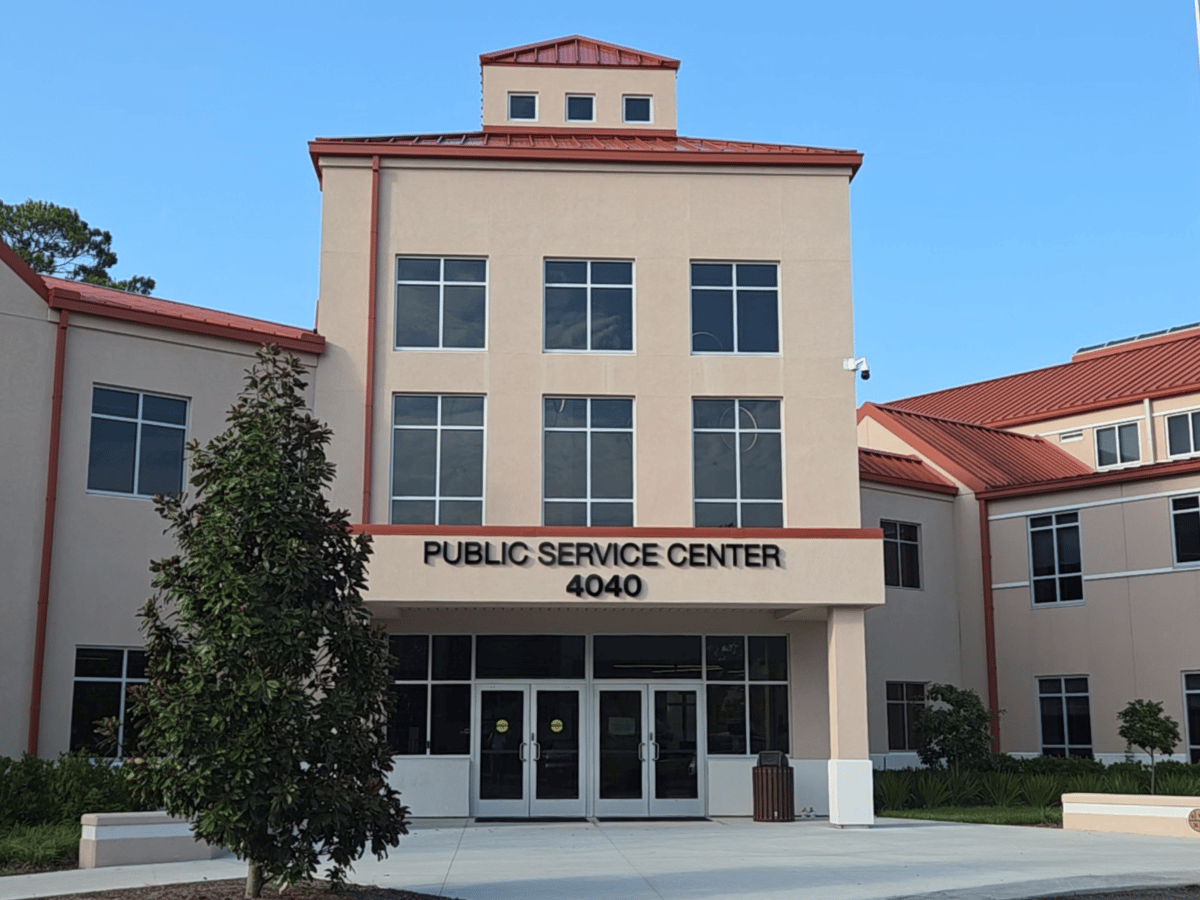
St. Johns County has opened a new Public Service Center at 4040 Lewis Speedway in St. Augustine, consolidating county permitting and clerk-of-court services in a single facility designed to eliminate the multi-stop runs that previously sent contractors, homeowners, and business owners shuttling between buildings across the county complex.
The center, which began providing clerk services on August 3, brings together county building and development permits with clerk functions including deed and Notice of Commencement recording, marriage licenses, passport applications, Value Adjustment Board filings, and public-records searches. The collaboration between St. Johns County and the St. Johns County Clerk of the Circuit Court and County Comptroller aims to streamline transactions that previously required visits to the separate Permit Center, the Richard O. Watson Judicial Center courthouse, and the main government complex.
What's happening
The Public Service Center is located at 4040 Lewis Speedway in St. Augustine. The facility is open Monday through Friday from 8 a. m. to 5 p. m.
Services available at the new center include county permitting services, recording services for deeds, Notices of Commencement, plats, planned unit development maps and other official-record documents, marriage licenses and wedding ceremonies, passport application acceptance, Value Adjustment Board applications, and public records searches.
The center features service kiosks that direct residents to the appropriate county or clerk window. According to the county, someone filing a Notice of Commencement—a document contractors record before starting work on a property to protect lien rights—can now begin at the county kiosk and be guided through the recording process without leaving the building. Previously, that transaction could have required stops at the Permit Center, the courthouse, and a return to the government complex.
The facility includes closer parking than the previous dispersed locations, additional customer-service windows, and expanded workspace for staff. Court operations and proceedings, including jury duty, child support assistance, restraining-order petitions, and traffic-ticket payments, continue to be handled at the Richard O. Watson Judicial Center at 4010 Lewis Speedway.
County Commission Chair Clay Murphy and Clerk of the Circuit Court and County Comptroller Brandon Patty were featured in a county-produced video showcasing the facility. Appointments and information are available through the clerk's office at 904-819-3600 or the clerk's website.
What it means for contractors and the development pipeline
In one of Florida's fastest-growing counties, the volume of permit and recording transactions has surged alongside residential and commercial construction. St. Johns County consistently ranks among the state's top counties for new-home construction, with master-planned communities such as Nocatee and SilverLeaf generating thousands of building permits annually.
Every new-home build, major renovation, and commercial project in unincorporated St. Johns County requires county permits. Many also require a Notice of Commencement to be recorded with the clerk before work begins—a legal step that establishes lien priority and protects contractors, subcontractors, and suppliers if payment disputes arise. Recording a Notice of Commencement within the timeframes required by Florida's Construction Lien Law is a routine but time-sensitive task for general contractors and project managers.
The previous process could cost builders and contractors hours of windshield time. A contractor pulling a permit for a remodel in Ponte Vedra Beach, for example, might visit the Permit Center to finalize approvals, drive to the courthouse to record the Notice of Commencement, and return to the government complex if additional county sign-offs were needed. For firms managing multiple projects or working on tight schedules, those trips added logistical friction and wait time.
The consolidated center is designed to collapse that loop. A builder can now arrive at 4040 Lewis Speedway, check in at a kiosk, obtain or finalize a permit at the county window, and immediately walk to the clerk's recording counter to file the Notice of Commencement—all in one stop. For high-volume residential builders managing dozens of simultaneous projects across St. Johns County's growth corridors, the time savings could be significant, particularly during peak permitting seasons in the spring and fall.
The center also handles recording of deeds, plats, and planned-unit-development maps, documents central to subdivision development and lot sales. Developers and title companies that previously scheduled separate trips to record final plats or corrective deeds can now pair those tasks with permit inquiries or plan reviews in the same visit.
What it means for homeowners and property owners
Homeowners undertaking additions, pool installations, or other projects that require both a county permit and a recorded Notice of Commencement will benefit from the same consolidation. In St. Johns County, where strong demand for renovations and accessory structures mirrors the broader housing boom, the typical do-it-yourself homeowner or small contractor no longer needs to map a multi-building itinerary.
The center also serves property owners navigating the Value Adjustment Board process—the mechanism by which Florida residents challenge their annual property-tax assessments. In a county where appraised values have climbed sharply in recent years, VAB petitions are a common recourse for homeowners who believe their assessed value exceeds market value. Previously, filing a VAB petition involved a trip to the clerk's office at the courthouse; now it can be combined with other county business at the Public Service Center.
Deed recording, another frequent homeowner transaction, is now co-located with permitting. A homeowner refinancing a mortgage or clearing a lien, for instance, often needs to record a satisfaction of mortgage or corrective deed. Being able to handle that recording in the same building where permit status can be checked or new permits pulled adds convenience for owner-builders and those managing inherited properties or estate transactions.
Passport services at the center may also draw foot traffic from residents who are combining errands. St. Johns County's population skews toward families and retirees, both demographics with relatively high passport demand for international travel. Offering passport application acceptance in the same facility as permitting and recording creates a true one-stop shop for households juggling travel plans and home projects.
What it means for county operations and service capacity
From a government-operations standpoint, the Public Service Center reflects a shift toward customer-experience design in local government—a priority the county ties to its strategic-plan goals of Organizational Excellence, Community Well-Being, and Community Trust.
The additional service windows and expanded workspace are responses to capacity pressure. St. Johns County's population has grown from roughly 190,000 in 2010 to an estimated 290,000 today, and the pace shows no sign of slowing. Permit volumes, recording transactions, and public-records requests have all climbed in tandem. The previous configuration, with services scattered across the courthouse and government complex, was designed for a smaller, slower-growing county.
By consolidating high-traffic clerk and permitting functions in a purpose-built facility, the county and clerk's office aim to reduce wait times and improve throughput during peak periods. The kiosk-based intake system is a workflow innovation intended to triage customers more efficiently than a traditional queue, directing them to the correct window on the first attempt and reducing redundant inquiries.
The closer parking is a practical detail that matters in a suburban county where almost all transactions arrive by car. The previous arrangement often meant navigating a crowded government-complex lot or courthouse garage; dedicated parking at the Public Service Center shortens the walk and, in Florida's summer heat, the exposure.
Separating routine public-service transactions from court operations also reduces congestion at the Richard O. Watson Judicial Center, where jury duty, restraining-order filings, and child-support cases continue. That functional split allows court security and clerk staff at the courthouse to focus on judicial support, while the Public Service Center handles the higher-volume, lower-security transactions such as permits and recordings.
What happens next
The Public Service Center is fully operational, with clerk services that began August 3 now running alongside county permitting functions. The facility is open Monday through Friday, 8 a. m. to 5 p. m. Residents can walk in or schedule appointments by calling Customer Care Clerks at 904-819-3600 or visiting the clerk's website.
No further public hearings or approvals are required; the center is a completed capital project, not a proposed initiative. The county has produced a video tour featuring County Commission Chair Clay Murphy and Clerk Brandon Patty, available through the county's Office of Public Affairs, to familiarize residents and businesses with the layout and services.
For contractors, title companies, and frequent users of permitting and recording services, the key operational question will be whether the expanded capacity and streamlined layout deliver the promised reductions in wait times and trip consolidation. That assessment will unfold over the coming months as the center handles its first full construction season.
The consolidation at 4040 Lewis Speedway is the latest in a series of infrastructure and service upgrades St. Johns County has undertaken to keep pace with its explosive growth, joining new schools, road widenings, and utility expansions as the county works to turn population growth into functional capacity without sacrificing the customer experience that has helped make Northeast Florida an in-migration magnet.