St. Johns County approves $1.9B budget with $264M for capital projects
The Board of County Commissioners held the property-tax rate flat while approving a fiscal 2027 spending plan that commits a quarter-billion dollars to roads, facilities, and other capital improvements.
The St. Johns County Board of County Commissioners has approved a $1.9 billion budget for fiscal year 2027, maintaining the current property-tax mileage rate while dedicating $264 million in new funding to capital improvement projects — a significant investment as the county continues to rank among Florida's fastest-growing.
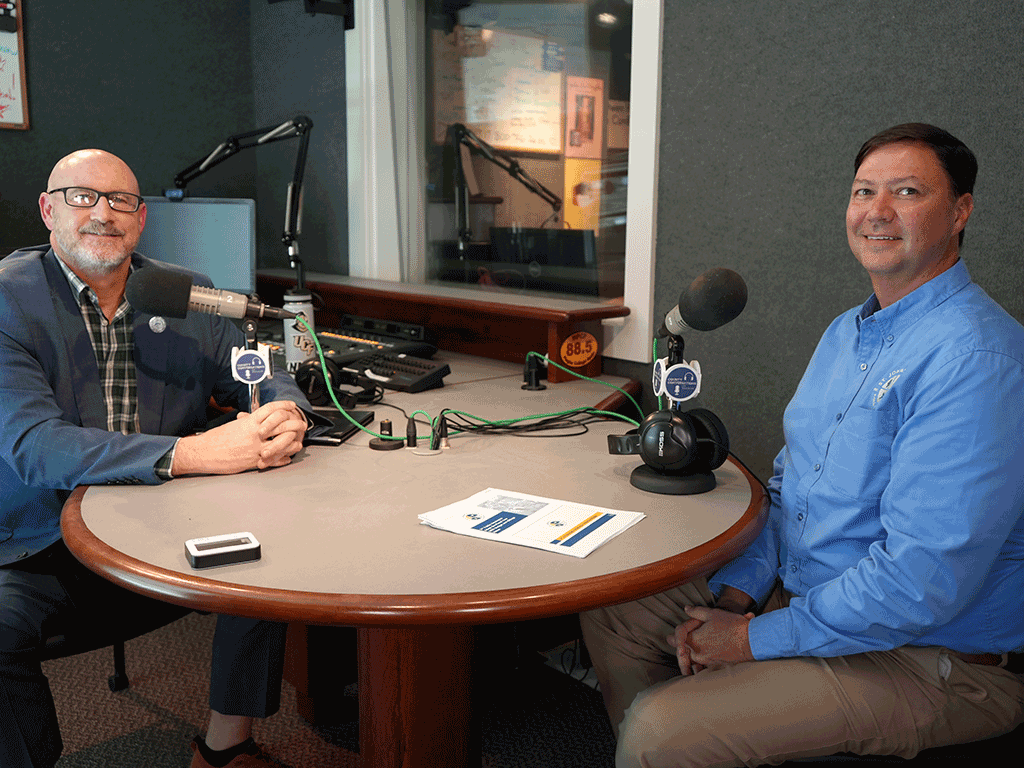
Wade Schroeder, director of the county's Office of Management & Budget, outlined the spending plan in a series of County Conversations podcast episodes released in late September. The approved budget takes effect October 1, 2026, the start of the county's fiscal year.
What's in the $1.9 billion budget
The fiscal year 2027 budget totals $1.9 billion, Schroeder confirmed in episodes of the County Conversations podcast. The Board of County Commissioners approved the budget with a flat mileage rate, meaning the property-tax rate per $1,000 of assessed value will not increase from the prior year.
The budget includes $264 million in new funding specifically earmarked for capital improvement projects, according to Schroeder. Capital improvement projects typically encompass infrastructure such as road widenings, new or expanded county facilities, stormwater systems, parks, and technology upgrades — long-term investments that extend beyond day-to-day operating expenses.
Schroeder discussed the budget across four podcast episodes — titled Budget 101, Property Taxes, 2027 Budget, and Amendment 3 — that aired on WFCF 88.5 Flagler College Radio and are available on the county's YouTube channel and major podcast platforms. In the episodes, he explained how the budget is assembled from various revenue sources and detailed the structure of the county's different funds.
The county also addressed Property Tax Amendment 3, a proposed state constitutional amendment that will appear on the November 3, 2026, general election ballot. Schroeder discussed potential effects of the measure in one episode. St. Johns County announced it has been preparing since May for either outcome and created a dedicated webpage at sjcfl. us/amendment-3 with an overview and estimated revenue effects. The county stated it does not advocate for or against the amendment but provides factual information to residents.
What the capital funding means for infrastructure and services
The $264 million in new capital project funding represents one of the largest line items a growing county can deploy to keep pace with population growth. St. Johns County has been among Florida's fastest-growing counties for years, with new subdivisions spreading along the CR 210 corridor, the Nocatee and SilverLeaf master-planned communities, and the SR 16 and World Golf Village areas.
Capital improvement projects are the mechanism through which counties build the physical infrastructure required by thousands of new residents each year: widening congested roads, expanding water and wastewater systems, constructing new libraries and government service centers, improving stormwater drainage to handle the runoff from acres of new rooftops and pavement, and adding parks and recreational facilities.
For homeowners and businesses already in St. Johns County, capital spending directly affects daily quality of life. Road projects can ease chronic bottlenecks on corridors such as CR 210, which has seen relentless traffic growth as subdivisions and commercial centers multiply. Stormwater investments reduce flood risk in older neighborhoods where aging systems struggle with heavier rainfall patterns and upstream development. Parks and trail projects add amenity value that supports property values and livability.
For developers and the construction industry, a robust capital budget signals that the county is committing local dollars — often a prerequisite to unlock state and federal matching funds — to extend the roads, utilities, and services that make new projects feasible. Projects that require road improvements or utility expansions often hinge on whether those improvements appear in a county's capital plan and whether funding is appropriated.
The county's decision to hold the property-tax rate flat while increasing capital spending suggests that revenue growth is being driven by rising property values and an expanding tax base rather than a rate increase. In a growing county, new construction — both residential and commercial — adds assessed value each year, generating additional tax revenue even when the rate per $1,000 does not change. That dynamic allows the county to increase total spending without raising the rate paid by existing homeowners, though individual tax bills still rise if property appraisals increase.
How growth shapes the budget and fiscal strategy
St. Johns County's fiscal position is tightly linked to its growth trajectory. The county routinely opens new schools, and the demand for new infrastructure — roads, fire stations, libraries, government offices — is constant. The Office of Management & Budget must balance the costs of growth with revenue streams that include property taxes, state revenue sharing, impact fees paid by developers, and various user fees.
The $1.9 billion total budget encompasses not only the general fund but also enterprise funds for utilities, special revenue funds, and debt-service funds. Capital improvement funding often comes from a mix of sources: ad valorem taxes, impact fees collected when building permits are issued, state and federal grants, and borrowing through bonds or commercial paper. The specific revenue mix for the $264 million in new capital funding was not detailed in the source material, but counties typically rely heavily on impact fees and dedicated capital millage to fund growth-related infrastructure.
Property Tax Amendment 3, discussed by Schroeder in one of the podcast episodes, adds uncertainty to future budgets. While the county has prepared for either outcome of the November vote, a change in the property-tax structure could materially affect revenue available for capital projects in future years. The county's public information page on the amendment provides estimated effects on county revenue, allowing residents and stakeholders to understand the fiscal stakes.
The flat mileage rate reflects a policy choice by the Board of County Commissioners. In years of rapid property-value appreciation, holding the rate flat is often positioned as tax relief, since homeowners' bills would otherwise rise faster. However, it also means the county is not capturing the full potential revenue increase that would come from holding the rate constant in real terms — a tradeoff that affects how much can be spent on capital projects, public safety, and other services without dipping into reserves or delaying projects.
What happens next and how residents can learn more
The fiscal year 2027 budget took effect October 1, 2026. The county will release details of individual capital projects as they move through design, permitting, and construction phases. Residents can track progress on major infrastructure initiatives through the county's Office of Management & Budget and Public Works departments.
The County Conversations podcast series — produced in partnership with WFCF 88.5 Flagler College Radio — airs at 5:30 p. m. Fridays and 6:30 p. m. Sundays on the station and is available on demand on the county's YouTube channel, major podcast streaming platforms, and the SJC Podcasts web page at sjcfl. us. The four episodes covering the fiscal 2027 budget and Property Tax Amendment 3 are available now.
Voters will decide Property Tax Amendment 3 on the November 3, 2026, general election ballot. The county's dedicated information page at sjcfl. us/amendment-3 provides an overview of the proposed amendment and estimated revenue effects. The county does not advocate for or against the measure but has stated it is preparing for either result.
Residents can subscribe to St. Johns County e-newsletters and follow updates through the Office of Public Affairs to stay informed on budget execution, capital project timelines, and other county news.
The broader Northeast Florida infrastructure challenge
St. Johns County's $264 million capital commitment is part of a region-wide effort to build infrastructure fast enough to accommodate one of the nation's most sustained population booms. Neighboring Clay County is rapidly expanding along the First Coast Expressway loop, Duval County is investing hundreds of millions in septic-to-sewer conversions and road improvements, and Nassau County is managing growth radiating from the Wildlight master-planned community.
The capital spending decisions made today — which roads get widened, where new parks are sited, how stormwater systems are upgraded — will shape the county's livability and fiscal health for decades. For a county that has grown as fast as St. Johns, the test is whether infrastructure investment can keep pace with rooftops, or whether roads, schools, and services fall behind and erode the quality of life that attracted residents in the first place.