
St. Johns County cuts ribbon on $42. 5M CR 210 widening
A three-mile stretch between Greenbriar Road and Cimarrone Boulevard is now four lanes, with new signals, sidewalks, and drainage to serve one of northwest St. Johns County's fastest-growing corridors.
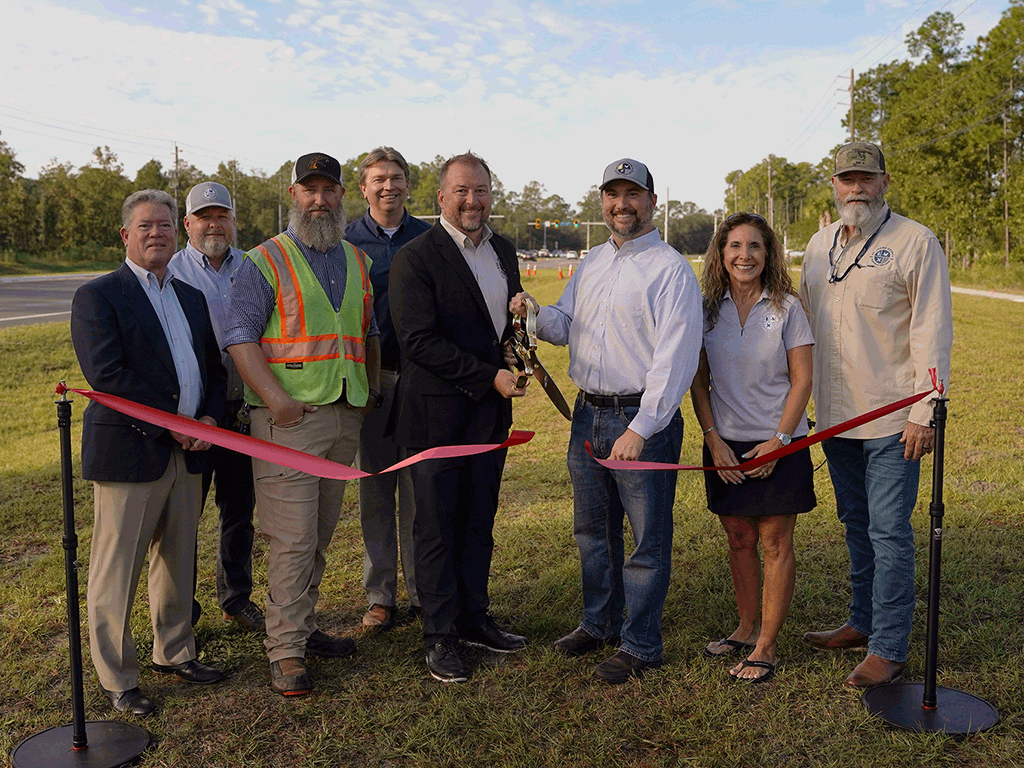
St. Johns County officials celebrated the completion of a major road-widening project on County Road 210 with a ribbon-cutting ceremony Sept. 30, marking the end of a $42. 5 million effort to expand capacity along one of the area's fastest-growing transportation corridors.
The project doubled the roadway from two lanes to four along a roughly three-mile stretch between Old CR 210/Greenbriar Road and Cimarrone Boulevard in northwest St. Johns County. The expansion connects to the existing four-lane section at Cimarrone, creating a continuous multi-lane route through a corridor that has seen explosive residential and commercial growth over the past decade.
What's happening
Approximately three miles of CR 210 were widened from two lanes to four between Old CR 210/Greenbriar Road and Cimarrone Boulevard, according to the county announcement. Construction began June 30, 2023, and wrapped up more than three years later.
The $42. 5 million project added new bridges, sidewalks on both sides of the roadway, and traffic signals at three intersections: Stillwater Boulevard/South Hampton, Shearwater, and Greenbriar Road/Old CR 210. Crews also installed curbing, stormwater pipes, and two drainage ponds to manage runoff along the corridor.
Funding came from a combination of impact fees and the Transportation Trust Fund, the county said. Superior Construction Co. served as the construction contractor, Osiris 9 was the civil engineer, and Eisman and Russo, Inc. provided construction engineering and inspection services.
"Widening the roadway was one part of a much broader effort," said Greg Caldwell, Director of St. Johns County Public Works. "The work included bridges, sidewalks, drainage improvements and new traffic signals, all of which contribute to how this corridor functions. We appreciate the patience of residents and local businesses throughout construction and the efforts of everyone who helped deliver this project. "
"There are some major infrastructure improvements that are going on in St. Johns County with the attempt to improve the quality of life for all the citizens of St. Johns County, and that's what we're committed to," said St. Johns County District 1 Commissioner Christian Whitehurst at the ceremony.
Why CR 210 matters to northwest St. Johns growth
County Road 210 is a primary east-west artery threading through the heart of northwest St. Johns County's development boom. The corridor connects established communities west of I-95—including the World Golf Village area and subdivisions near CR 13—to newer master-planned developments farther east and the rapidly growing Nocatee area closer to the coast.
As St. Johns County has consistently ranked among Florida's fastest-growing counties, CR 210 has become a critical corridor for commuters, school buses, and commercial traffic serving thousands of rooftops built over the past fifteen years. The segment between Greenbriar and Cimarrone passes through a zone of active residential construction, with large subdivisions filling in former pasture and timberland on both sides of the road.
Widening this stretch to four lanes removes what had been a two-lane bottleneck between already-widened segments to the west and east. Before the project, drivers moving between I-95 and eastern portions of CR 210 faced a sudden constriction to two lanes, creating backups during morning and evening peak periods and raising safety concerns as traffic volumes climbed year over year.
The addition of continuous sidewalks on both sides also addresses a longstanding gap in the county's pedestrian network. Many of the subdivisions along this stretch were built without direct sidewalk connections to schools, parks, or commercial nodes, forcing families who walk or bike to navigate roadway shoulders. The new concrete paths provide a safer alternative and fulfill a key component of the county's connectivity goals in areas where growth has outpaced earlier infrastructure plans.
Traffic flow and commuter relief
The completion of the widening is likely to bring measurable relief to daily commuters who have watched congestion worsen as construction proceeded. Four-lane divided roadways typically carry significantly higher traffic volumes than two-lane rural roads, and the new configuration includes turn lanes at major intersections to reduce conflicts between through traffic and vehicles entering or leaving subdivisions and commercial driveways.
The three new traffic signals—at Stillwater Boulevard/South Hampton, Shearwater, and Greenbriar Road/Old CR 210—formalize key crossing points that previously relied on uncontrolled left turns across opposing lanes. Signal timing and coordination will be critical to maintaining flow; poorly synchronized lights can negate capacity gains from added lanes. The county's public works department typically uses adaptive signal systems on major corridors to respond to real-time traffic patterns, though the announcement did not specify whether such technology is deployed here.
For residents of subdivisions along the route, the widening may also shift where traffic pressure shows up next. As CR 210's capacity increases, development activity often accelerates on adjacent parcels, and side streets feeding into the corridor can experience upticks in cut-through traffic as drivers seek shortcuts around remaining bottlenecks elsewhere in the network. Neighborhood streets near the Greenbriar and Cimarrone intersections will be worth watching as travel patterns adjust to the new configuration.
Commercial drivers and logistics operators serving the area's retail centers and warehouses also stand to benefit. Reliable travel times along CR 210 improve the efficiency of delivery routes and employee commutes, factors that weigh into site-selection decisions for new businesses. The corridor's role as a link between I-95 and points east makes it a spine for both local trips and regional through-traffic.
Drainage, stormwater, and flood resilience
The addition of two drainage ponds, new stormwater pipes, and curbing reflects the realities of widening roads in Northeast Florida's low-lying, high-water-table landscape. Expanding impervious surface area—asphalt, concrete curbs, and bridge decking—increases the volume and velocity of runoff during rainstorms, and state and local regulations require projects to capture and treat that runoff before it enters rivers, wetlands, or downstream neighborhoods.
Stormwater management is a recurring concern along CR 210, where tributaries of the St. Johns River system thread through the surrounding landscape. Inadequately managed runoff can carry sediment, oils, and other pollutants into creeks and wetlands, degrading water quality and stressing aquatic ecosystems. The county did not specify the size or design of the two new ponds, but projects of this scale typically include retention or detention basins sized to handle the increased flows from the expanded roadway footprint.
The new drainage infrastructure also has implications for adjacent properties. Improved roadway drainage can alleviate flooding on nearby parcels if the ponds are designed to accept flows from contributing areas beyond the right-of-way, or it can redirect water in ways that change historic flow patterns. Property owners near the new ponds and pipe outfalls will want to monitor how the system performs during heavy rain events, particularly tropical storms and hurricanes that test capacity limits.
Bridge replacements or upgrades—mentioned in the project scope but not detailed in the announcement—may also improve flood resilience by raising deck elevations or widening spans to reduce constriction of flows during high-water events. Bridges are often pinch points where debris can accumulate and water can back up, so modern designs aim to minimize obstruction.
Economic development and property values
Infrastructure improvements of this magnitude typically influence development patterns and property values in the corridor. For commercial property owners, the widened roadway and new signals improve visibility and access, key factors for retail and service businesses that rely on drive-by traffic. Vacant or underutilized parcels near the new signalized intersections may see increased interest from developers as sites for gas stations, strip centers, or fast-food restaurants—uses that thrive on high traffic counts and easy ingress and egress.
Residential property owners in subdivisions along the route may experience mixed effects. Improved access and shorter commute times are amenities that can support home values, particularly in a county where school quality and convenience to employment centers in Jacksonville drive buyer demand. At the same time, the shift from a quiet two-lane road to a busy four-lane highway can bring noise, headlights, and a loss of the semi-rural character that attracted some early buyers to the area.
The project's $42. 5 million price tag also offers insight into the infrastructure costs embedded in St. Johns County's growth. The funding mix—impact fees collected from new development and money from the Transportation Trust Fund—reflects the pay-as-you-grow model Florida counties use to finance roads, schools, and utilities in expanding areas. Impact fees are one-time charges on new construction intended to cover the proportional cost of the infrastructure needed to serve additional residents; the fact that fees contributed a substantial share of this project's cost underscores the volume of new housing approved in northwest St. Johns in recent years.
For prospective homebuyers and developers, the completion of the CR 210 widening signals that the county is working to keep pace with growth, but it also raises questions about the next bottleneck. Road projects of this scale take years to plan, fund, and build, and corridors can reach capacity again quickly if development approvals continue at a rapid clip. The county's ability to maintain mobility as rooftops multiply will depend on sustained investment and coordination between land-use planning and transportation capital budgets.
What happens next
With the Sept. 30 ribbon-cutting, the CR 210 widening project between Greenbriar Road and Cimarrone Boulevard is officially complete and open to the public. The roadway is now part of the county's maintenance inventory, and responsibility for signal timing, pavement upkeep, and stormwater system operation shifts from the construction contractor to the St. Johns County Public Works Department.
The county did not announce immediate plans for additional widening segments along CR 210, but the corridor remains a priority in regional transportation planning. Further east, CR 210 continues toward Nocatee and the Intracoastal Waterway, where traffic volumes are among the highest in the county. To the west, the road extends through rural areas of northwest St. Johns that are seeing preliminary development interest as land closer to I-95 fills in.
Residents and commuters can expect the typical post-construction adjustment period as drivers adapt to the new lane configuration, signal timings are fine-tuned, and any punch-list items or warranty work are addressed. The county encourages feedback on roadway conditions and traffic operations through its public works department.
The St. Johns County Strategic Plan, referenced in the announcement, identifies reliable infrastructure and enhanced mobility as core goals. The CR 210 project advances those objectives, but the plan's success will be measured by the county's ability to deliver similar improvements across other corridors feeling the pressure of growth—CR 13, SR 16, and International Golf Parkway among them.
As one of the largest single road projects completed in St. Johns County in recent years, the CR 210 widening is both a milestone and a reminder of the infrastructure demands embedded in Northeast Florida's growth trajectory. The region's appeal—affordability, schools, quality of life—continues to draw new residents, and each new household adds trips to the road network. How well counties plan, fund, and build ahead of that demand will shape whether growth enhances communities or strains them.
Sources
- St. Johns County: CR 210 Road Widening Ribbon-Cutting Ceremony