
St. Johns County Opens $191.8M Water Reclamation Facility on State Road 207
The county's largest-ever capital project went online in May and is expected to prevent more than one million pounds of nutrient pollution from reaching the Matanzas River over the next two decades.
Corrections
- Correction: Formatting was corrected in the project cost, treatment-capacity figures and event time. The underlying figures and source did not change.
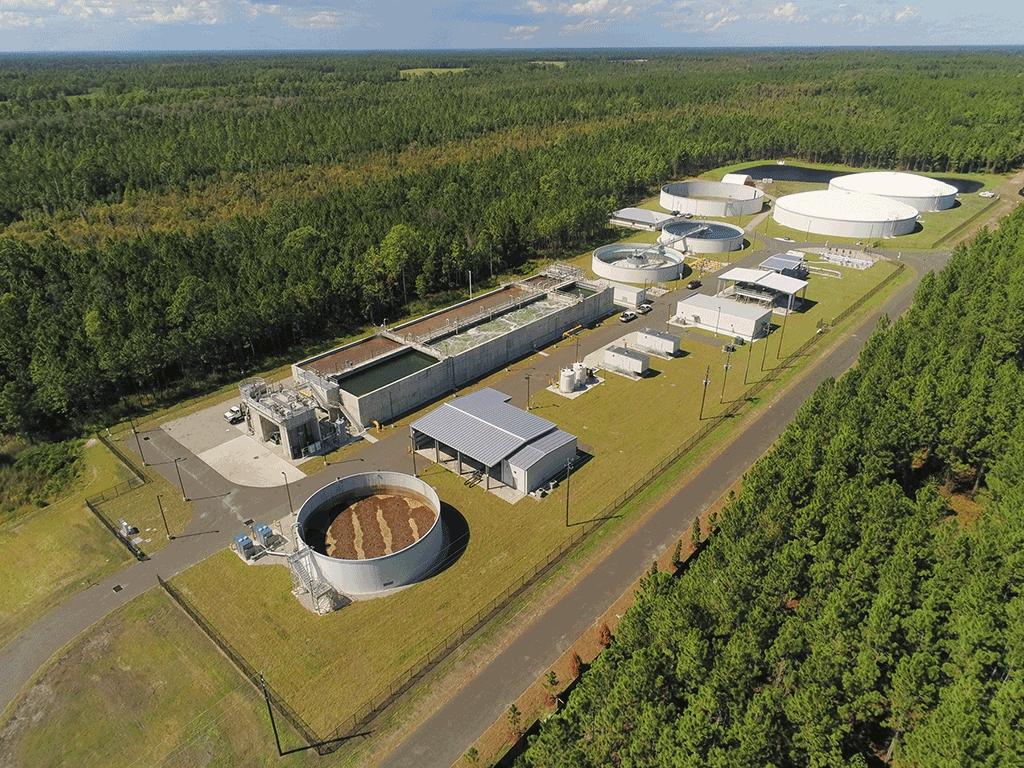
St. Johns County will hold a ribbon-cutting ceremony Thursday for the State Road 207 Water Reclamation Facility in Elkton, celebrating completion of the county's largest capital improvement project in its history. The $191.8 million facility has been treating wastewater and producing reclaimed irrigation water since May 11, 2026, marking a major expansion of the county's utility infrastructure in one of its fastest-growing corridors.
The public ceremony is scheduled for 9 a.m. on October 15 at the facility, located at 3055 State Road 207 in Elkton. St. Johns County Board of County Commissioners Chair Clay Murphy, County Utilities Director Neal Shinkre, and Jacobs North Florida Vice President Mike Dykes are scheduled to speak. Tours of the facility will follow the ribbon cutting; attendees are asked to wear closed-toe shoes.
What's happening
The State Road 207 Water Reclamation Facility treats wastewater and produces reclaimed water for irrigation, a dual purpose designed to conserve drinking water supplies and protect local waterways. The facility launched with an initial treatment capacity of 3.25 million gallons per day and can be expanded to 6.5 million gallons per day.
The project included construction of multiple pump stations and approximately 15 miles of wastewater and reclaimed water pipelines connecting the facility to the St. Johns County utility system. Jacobs delivered the facility through a design-build contract.
Over the next 20 years, the project is expected to prevent more than one million pounds of nutrient pollutants—including nitrogen and phosphorus—from entering the Matanzas River, according to the county. The facility came online May 11, 2026.
The $191.8 million price tag makes it the largest capital improvement project in St. Johns County history. The project supports the county's strategic plan by investing in resilient infrastructure, protecting natural resources, and enhancing quality of life for current and future residents, the county stated.
Why the Matanzas River matters
The Matanzas River forms part of the Guana Tolomato Matanzas National Estuarine Research Reserve, one of the most ecologically sensitive coastal watersheds in Northeast Florida. Excess nitrogen and phosphorus from wastewater and stormwater runoff fuel algae blooms that starve seagrass beds of light and deplete oxygen levels in the water, threatening fish, manatees, and the estuary's productive marsh systems.
By treating wastewater to higher standards and keeping nutrient loads out of the river, the new facility addresses a chronic challenge in fast-growing coastal counties: how to add homes, schools, and businesses without degrading the waterways that define the region's character and economy. St. Johns County's coastline draws residents for its natural beauty and supports a significant portion of the county's tourism and real-estate value.
The one-million-pound nutrient-reduction target over 20 years reflects the cumulative benefit of treating wastewater from the SR 207 service area rather than relying on septic systems or discharge methods that allow more nutrients to reach surface waters. Septic systems, common in rural and low-density areas, can leach nitrogen and phosphorus into groundwater that eventually flows to rivers and estuaries. Wastewater reclamation facilities use advanced treatment processes to remove those nutrients before water is released or reused.
The Matanzas River watershed has been a focus of state and federal water-quality programs for years. The river is part of the broader Indian River Lagoon system, which has struggled with harmful algae blooms, seagrass die-offs, and fish kills tied to nutrient pollution from agriculture, urban runoff, and aging wastewater infrastructure.
Supporting growth along the SR 207 corridor
State Road 207 runs east-west through central St. Johns County, connecting I-95 near Elkton to the coastal communities around St. Augustine and the beaches. The corridor has seen steady residential and commercial growth as the county's population has surged—St. Johns County is among the fastest-growing counties in Florida, driven by top-rated schools, relative affordability compared to South Florida, and proximity to Jacksonville's employment centers.
Wastewater infrastructure is often the limiting factor for new development in areas without existing sewer service. The 15 miles of pipeline connecting the new facility to the county's utility system extend the reach of centralized wastewater treatment into areas that previously relied on septic systems or lacked the capacity for denser development.
The facility's initial 3.25-million-gallon-per-day capacity and planned expansion to 6.5 million gallons per day suggest the county is planning for decades of continued growth in the service area. For context, a typical single-family home generates roughly 250 to 300 gallons of wastewater per day; at full buildout, the facility could theoretically serve the equivalent of more than 20,000 homes, though actual capacity depends on the mix of residential, commercial, and institutional users.
The production of reclaimed water for irrigation is a key component of the project. Reclaimed water—treated wastewater that meets state standards for non-potable reuse—can be used to water parks, golf courses, highway medians, and residential lawns in communities with dual plumbing systems. This reduces demand on the Floridan Aquifer, the region's primary drinking-water source, which is under pressure from population growth, agricultural use, and saltwater intrusion in coastal areas.
St. Johns County Utilities, like other rapidly growing systems in Northeast Florida, must balance the costs of building capacity ahead of development with the risks of constraining growth or forcing residents onto septic systems in sensitive areas. Large capital projects like the SR 207 facility are typically financed through a combination of utility rates, impact fees paid by developers, and low-interest state loans.
How design-build works
The county used a design-build contract with Jacobs, a delivery method that has become more common for complex water and wastewater projects in Florida. Unlike traditional design-bid-build, where the design is completed before a contractor is selected, design-build brings the designer and contractor into partnership early in the process.
This approach allows the team to refine designs in response to site conditions, cost estimates, and constructability challenges as the project moves forward, potentially reducing change orders and schedule delays. The contractor provides cost and schedule input during design, and the owner retains the ability to stop the project at key milestones if costs exceed budget.
For a project of this scale and technical complexity—wastewater treatment facilities involve permit-intensive civil, mechanical, electrical, and environmental engineering—the design-build method can help manage risk and keep the project on track. The May 2026 online date and October ribbon cutting suggest the project met its schedule commitments.
What happens next
The facility is already operational, having come online in May. The October 15 ribbon-cutting ceremony is a formal celebration and public tour opportunity, not the start of service. Residents and businesses in the SR 207 service area connected to the new pipeline network are already using the facility.
The next phase of the project will be monitored through the county's ongoing capital planning and utility rate-setting processes. Expansion to the full 6.5-million-gallon-per-day capacity will depend on growth patterns, connection rates, and available funding. St. Johns County Utilities publishes annual reports and holds public meetings where capacity planning and rate structures are discussed; residents interested in how the project affects their utility bills or service availability can follow the county's Board of County Commissioners agenda and the Utilities Department's capital improvement plan.
The environmental benefits—particularly the nutrient-reduction targets for the Matanzas River—will be tracked over time through water-quality monitoring by the county, the St. Johns River Water Management District, and the Guana Tolomato Matanzas National Estuarine Research Reserve. Those agencies routinely sample river water for nitrogen, phosphorus, dissolved oxygen, and other indicators; publicly available data will show whether the facility is meeting its pollution-prevention goals.
Thursday's ceremony will include a video produced by the county's Office of Public Affairs highlighting the project. Tours will offer the public a firsthand look at the treatment processes, pump stations, and reclaimed-water systems that represent the county's largest-ever infrastructure investment.
Fitting into the region's growth story
The State Road 207 Water Reclamation Facility is the latest in a series of major wastewater and water-supply projects across Northeast Florida as local governments race to build capacity for a population boom that shows no signs of slowing. St. Johns County alone has added tens of thousands of residents over the past decade, with growth concentrated along the CR 210 corridor, the Nocatee and SilverLeaf master-planned communities, and the SR 16 area near World Golf Village.
Across the region, utilities are grappling with the same trade-offs: build expensive treatment plants and pipelines to unlock growth and protect water quality, or risk septic-system sprawl, development bottlenecks, and environmental degradation. The $191.8 million investment in Elkton reflects St. Johns County's bet that centralized infrastructure and reclaimed-water reuse are the path to managing growth without sacrificing the natural assets that make the area desirable in the first place. Whether that strategy keeps pace with demand, holds utility rates steady, and delivers the promised environmental benefits will shape the county's trajectory for decades to come.