
St. Johns County prepares $1. 9B budget, $200M revenue hit from tax amendment
The county's FY 2027 budget includes $264 million for capital projects, but officials are building reserves and planning for potential cuts if voters approve a proposed property-tax cap in November.
St. Johns County has approved a $1. 9 billion budget for fiscal year 2027 that includes $264 million in new capital improvement funding, but officials are simultaneously building financial reserves and contingency plans for steep revenue losses if voters approve a property-tax amendment on the November ballot.
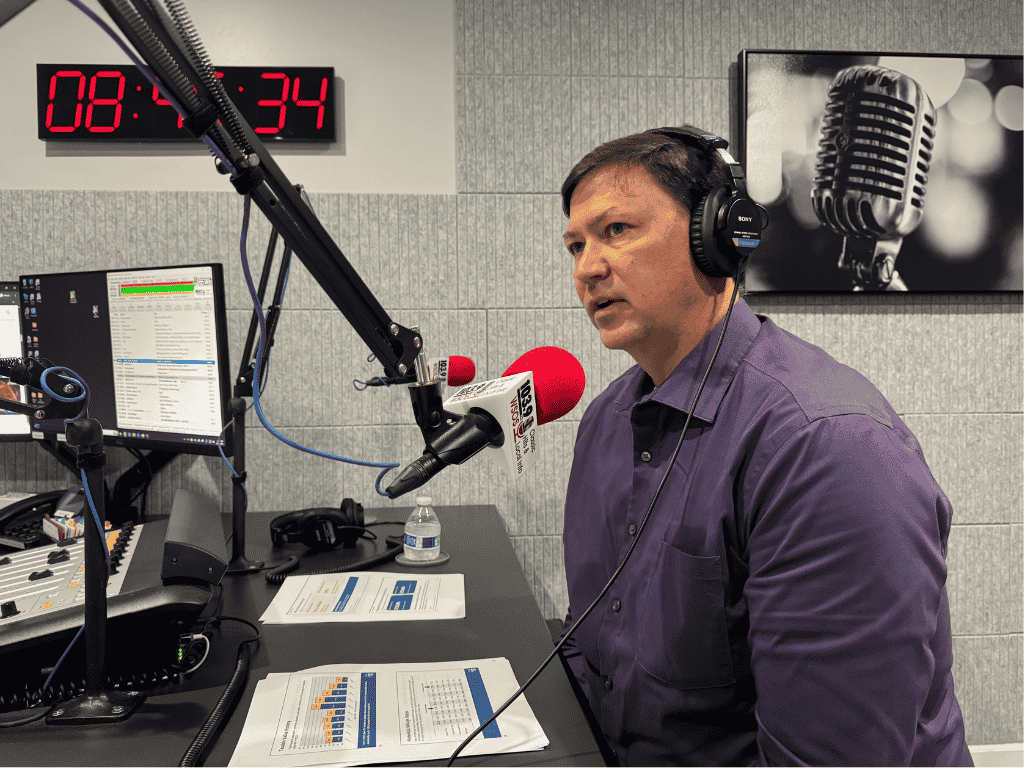
Wade Schroeder, Director of the Office of Management & Budget, detailed the fiscal picture during the October 7 Behind the SJCenes podcast, explaining how the county is navigating record growth while preparing for the possibility that Amendment 3 could slash property-tax revenue by nearly $200 million within five years.
What's in the approved budget
The Board of County Commissioners approved the Fiscal Year 2027 budget with a flat property-tax mileage rate, meaning the rate per $1,000 of taxable value remains unchanged from the previous year. The $1. 9 billion total budget encompasses all county funds, with $264 million earmarked specifically for Capital Improvement Projects.
In response to Amendment 3, which appears on the November 3, 2026, General Election ballot, the county is strengthening its reserves. Commissioners approved $31. 2 million in emergency response reserves and designated an additional $30 million in General Fund reserves explicitly for financial resiliency if the amendment passes.
According to the Florida Office of Economic and Demographic Research, if Amendment 3 is approved, St. Johns County could face estimated property-tax revenue reductions of $68. 3 million in FY 2028, $136. 1 million in FY 2029, and $191. 6 million by FY 2032. The county has been preparing for these potential impacts since May and created a dedicated informational webpage at sjcfl. us/amendment-3.
The county has stated it does not advocate for or against the amendment but is providing factual information to residents and preparing operational scenarios for either outcome. Schroeder discussed the budgeting process, how revenue is assembled from various sources, the structure of different budget funds, and the potential effects of the proposed amendment during the October 7 broadcast on WSOS 103. 9 FM.
What it means for county services and growth
St. Johns County is one of Florida's fastest-growing counties, driven by highly rated schools, relative affordability compared to coastal metro areas, and steady residential development in master-planned communities such as Nocatee, SilverLeaf, and the SR 16 corridor. That growth generates rising property-tax revenue even at a flat mileage rate, as new construction and home sales add taxable value to the rolls.
The $264 million in new capital project funding approved for FY 2027 reflects the infrastructure demands that accompany that growth. Capital improvement projects in fast-growing counties typically include road widenings, new school facilities, stormwater and drainage upgrades, park and recreation expansions, public-safety facilities, and technology infrastructure. Each of these categories directly affects residents' quality of life, from how long children spend on school buses to whether roads can handle increased traffic and whether drainage systems keep pace with new pavement.
A flat mileage rate in a growth market means homeowners whose assessed property values rose will see higher tax bills even though the rate itself did not increase. For existing residents, especially those on fixed incomes, the interplay between rising home values and tax bills is a recurring concern in high-growth areas across Northeast Florida.
The capital budget also influences the regional development pipeline. Developers typically watch county capital plans closely because road, sewer, and drainage capacity determines where and how quickly new projects can proceed. Uncertainty about future county capital spending—should Amendment 3 pass and force cuts—could slow permitting timelines or shift the calculus on marginal projects.
How Amendment 3 could reshape the capital plan
If voters approve Amendment 3, the projected revenue reductions would place the county's ability to maintain both services and capital investment under immediate pressure. The $68. 3 million potential shortfall in FY 2028 is more than a quarter of the $264 million capital budget approved for FY 2027. By FY 2032, the $191. 6 million cumulative reduction would rival the size of an entire year's capital program.
Florida counties fund capital projects through a mix of current property-tax revenue, debt financing, impact fees paid by developers, state and federal grants, and special assessments. A sharp reduction in property-tax revenue would leave the county with several options, none without tradeoffs: delay or cancel projects, increase debt and the debt-service burden on future budgets, raise impact fees if legally permissible, seek more intergovernmental grants, or reduce operating budgets to free up general revenue for capital needs.
The $30 million General Fund reserve designated for Amendment 3 resilience provides a one-time cushion but would be exhausted quickly if the cuts materialize. Emergency response reserves, while critical for hurricane recovery and disaster costs in a coastal county, are typically restricted and cannot easily be redirected to routine capital or operating needs.
For residents, the practical effect would depend on which projects the county prioritizes or defers. Road widenings along chronically congested corridors such as CR 210, school expansions to keep pace with new subdivisions, stormwater retrofits in flood-prone older neighborhoods, and park improvements all compete for the same shrinking pool of capital dollars. The county's decision-making in a constrained environment would determine whose neighborhood sees improvements and whose waits.
What property owners and developers should watch
The election is November 3, 2026. If Amendment 3 passes, the revenue impacts would begin in FY 2028, giving the county roughly one budget cycle to adjust. Schroeder's discussion of the amendment on the podcast signals that the county administration is preparing detailed scenarios for either outcome, but the Board of County Commissioners would make the final decisions on service levels, project delays, and any potential fee or rate changes.
County budget workshops and commission meetings in the months following the election will be the venue where those decisions take shape. Residents, neighborhood associations, and business groups that want input on capital priorities should plan to attend or submit comments during those sessions. The county's strategic plan and the annual budget process are the formal mechanisms for public participation.
The county's informational webpage on Amendment 3 and Schroeder's podcast interview are available for residents who want to understand the details before voting. The Behind the SJCenes podcast airs every first and third Wednesday at 8:30 a. m. on WSOS 103. 9 FM and is available on the St. Johns County YouTube Channel and major streaming platforms. Episodes are archived on the county's podcasts webpage.
The bigger picture for Northeast Florida
St. Johns County's fiscal planning reflects the tension facing fast-growth counties across Northeast Florida: how to finance the infrastructure that growth requires while managing the tax burden on existing residents and preparing for potential state-level policy changes that could upend local revenue streams. Clay and Nassau counties face similar dynamics as the First Coast Expressway loop and the Wildlight master plan drive new development and demand for roads, schools, and services.
The outcome of Amendment 3 will be watched closely by local governments, developers, and economic-development officials throughout the region. A property-tax cap that significantly reduces local revenue would force counties to rethink the pace and financing of growth-related infrastructure, with ripple effects for housing supply, commercial development timelines, and the region's competitive position as an alternative to higher-cost metro areas in South Florida and along the I-4 corridor. What happens in St. Johns County in the months ahead may preview broader shifts in how Northeast Florida manages its growth trajectory.
Sources
- St. Johns County: Behind The SJCenes Podcast Features Budget Director