
St. Johns Library Coordinator Selected for MIT STEAM Innovation Program
Kathryn Rosenburg of the Main Branch Library will develop portable STEAM kits to expand hands-on learning opportunities across the county's library system.
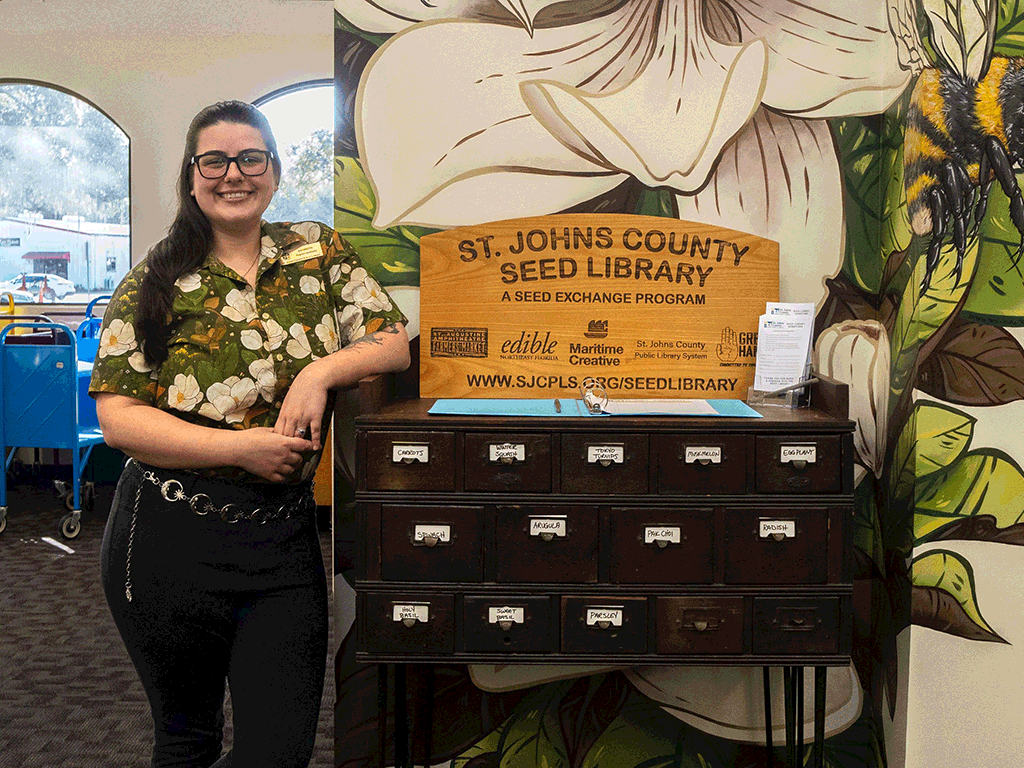
Kathryn Rosenburg, Library Programs Coordinator at St. Johns County's Main Branch Library, has been selected as one of 14 librarians nationwide for MIT's Public Library Innovation Exchange (PLIX) Ambassador Program. The appointment positions her to expand Science, Technology, Engineering, Art, and Mathematics (STEAM) learning opportunities across the county's library system.
Rosenburg applied to the program to bring new creative learning activities to St. Johns County communities. She aims to develop 12 portable STEAM kits that staff at any branch can deploy with minimal setup, extending programming beyond the Main Branch to all library locations throughout the county.
What the program offers
The MIT Public Library Innovation Exchange Ambassador Program connects librarians from across the country to share best practices and develop hands-on STEAM activities for their communities. As one of 14 participants selected nationally, Rosenburg will learn from peer libraries about what has worked well in creating engaging, accessible science and technology programming.
"I want to learn from others, work on new ideas together, and find ways to keep STEAM programs strong and sustainable," Rosenburg said in the county announcement. "I also want to take these programs beyond the Main Branch Library and make them available to all of our communities. "
The program focuses on making STEAM education feel approachable rather than intimidating. Rosenburg emphasized that one of her core goals is to help both patrons and staff feel confident trying new activities, removing barriers that can sometimes make science and technology topics seem inaccessible.
Building on existing programs at the Main Branch
Rosenburg currently coordinates the Main Branch Library's Learning Hub, which offers monthly hands-on STEAM activities centered on topics including dinosaurs, outer space, and the human body. The programs are designed to engage patrons of all ages through experiential learning rather than traditional classroom-style instruction.
Beyond programming, Rosenburg has transformed the physical space of the Main Branch to create a more engaging environment. She has painted murals on branch walls and windows, including permanent installations in the teen area and near the seed library. The entrance mural to the children's area rotates with different themes and seasonal events, adding visual interest and creating a welcoming atmosphere for families.
These existing efforts at the Main Branch demonstrate the approach Rosenburg plans to scale across the St. Johns County library system through the portable STEAM kits. The kits are designed to require minimal staff training and setup time, making it feasible for branches with varying staffing levels and physical space to offer consistent programming.
Expanding access across St. Johns County
St. Johns County's library system serves a fast-growing population spread across multiple communities, from coastal areas along A1A to inland growth corridors near CR 210 and the World Golf Village area. The county's explosive residential growth over the past decade—driven in large part by families attracted to the area's highly rated schools—has increased demand for educational enrichment opportunities beyond the classroom.
Public libraries in rapidly growing counties often face the challenge of delivering consistent programming across multiple branches serving diverse neighborhoods, some with newer facilities and others in older, smaller buildings. Portable, standardized program kits address this equity issue by enabling smaller branch locations to offer the same quality of STEAM activities available at the Main Branch without requiring dedicated programming staff or specialized equipment at every site.
The 12 portable kits Rosenburg plans to develop would allow branch staff to rotate programming throughout the system, ensuring that families in Ponte Vedra, Nocatee, the northwest county growth areas, and other communities all have access to hands-on learning opportunities regardless of which library is closest to home. This model is particularly relevant in St. Johns County, where residential development has outpaced infrastructure in some areas and families may rely heavily on the nearest branch library as a community anchor and educational resource.
Connecting STEAM learning to workforce development
While Rosenburg's programs target all ages, expanding STEAM literacy in St. Johns County aligns with broader regional workforce needs. Northeast Florida's economy increasingly depends on sectors that require technical skills—including logistics and distribution, advanced manufacturing at Cecil Commerce Center, aviation maintenance supporting military installations, and the growing health-care sector.
Libraries play a role in the educational ecosystem by offering informal learning opportunities that complement K-12 instruction and can spark early interest in science and technology fields. Programs that make STEAM subjects feel accessible and creative, rather than intimidating, can help cultivate a pipeline of residents comfortable with technical learning—an asset as the region works to attract and retain employers in knowledge-based industries.
The portable kit model also supports workforce readiness among library staff themselves. By designing activities that require minimal specialized training, Rosenburg is building capacity across the library system's workforce, enabling more staff members to facilitate educational programming. This approach reflects a practical understanding of how public institutions in growing counties must leverage existing personnel to meet expanding service demands.
What libraries provide beyond books
Public libraries have evolved into community hubs offering far more than traditional lending services. The St. Johns County system exemplifies this shift, with branches providing meeting spaces, technology access, programming for seniors, early-literacy story times, and now expanding STEAM education.
In counties experiencing rapid residential growth, libraries often serve as gathering places and educational resources for families before schools are built or expanded to meet enrollment demand. St. Johns County has opened multiple new schools in recent years to keep pace with residential development, but libraries remain a consistent presence offering year-round programming that complements the academic calendar.
Rosenburg's Learning Hub and the planned portable kits represent an investment in making the library system a destination for experiential learning, not just book borrowing. The physical improvements she has made at the Main Branch—murals, themed displays, dedicated activity spaces—signal to patrons that the library is a creative, welcoming environment where hands-on exploration is encouraged.
This programming model is cost-effective for local governments because it leverages existing infrastructure (library buildings and staff) to deliver educational value without building new facilities or creating standalone programs. The portability of the kits means capital investment is minimal compared to outfitting every branch with permanent STEM labs, while still delivering countywide access.
What happens next
Rosenburg will participate in the MIT PLIX Ambassador Program alongside the 13 other selected librarians from across the country. The program involves collaborative learning, idea exchange, and support for developing sustainable programming models.
As she develops the 12 portable STEAM kits, implementation will depend on coordination with branch managers throughout the St. Johns County library system and training for staff who will facilitate the activities. The county announcement did not specify a timeline for rollout or budget details for kit development.
Residents interested in current STEAM programming can find information through the St. Johns County Public Library System website, which lists activities at the Main Branch and other locations. Monthly Learning Hub programs at the Main Branch continue to offer hands-on activities on rotating science topics.
Rosenburg's selection highlights St. Johns County's investment in library services as a public amenity that supports educational enrichment and quality of life—factors that continue to draw families to Northeast Florida's fastest-growing county. As residential growth adds thousands of new households each year, the capacity of public institutions like libraries to scale programming efficiently will shape how newcomers and long-time residents alike experience community life beyond their own neighborhoods.