
Fort Matanzas Beach Ramp in St. Johns County Reopens with ADA Upgrades
The county has completed resiliency and accessibility improvements to the popular Rattlesnake Island beach access, with the National Park Service funding the expanded project scope.
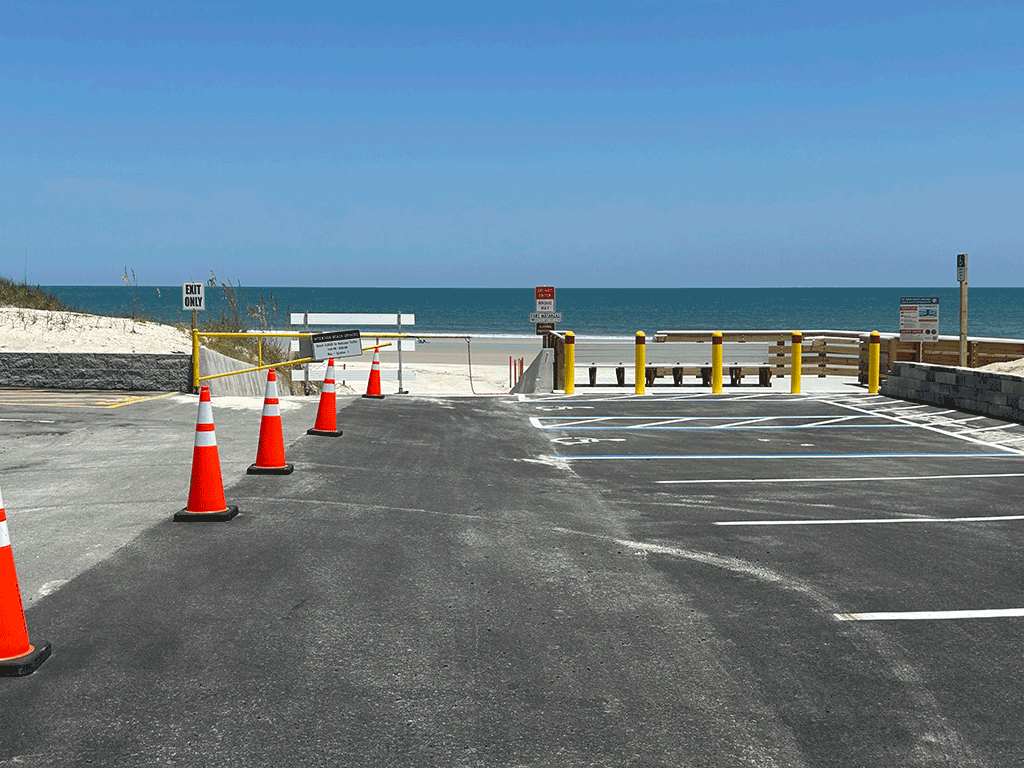
St. Johns County has reopened the Fort Matanzas vehicular beach access ramp after nearly 10 months of construction, completing a project that grew to include new ADA accessibility features in coordination with the National Park Service.
The ramp, which provides vehicle access to the beach at Rattlesnake Island south of St. Augustine Beach, closed for resiliency upgrades on Nov. 17, 2025. County Public Works expanded the project during construction to add accessible parking and entrance improvements to the National Park Service property. The Park Service funded the entire project; no county revenue was used.
What was upgraded
The project began as resiliency upgrades to the vehicle ramp itself—work designed to strengthen coastal infrastructure against erosion and storm impacts common along the barrier-island shoreline. During construction, St. Johns County Public Works and the National Park Service, which owns the Fort Matanzas property, agreed to incorporate ADA accessibility upgrades to the parking lot and entrance area that were not part of the original scope.
The county's Office of Public Affairs released a timelapse video showing the construction process. Riptide Marine & Land Construction served as the contractor, working with county Public Works staff and National Park Service personnel.
Funding for both the original resiliency work and the expanded accessibility improvements came from the National Park Service. The county has confirmed no St. Johns County revenue was spent on the project.
Access for beachgoers with disabilities
The addition of ADA accessibility features addresses a persistent gap in coastal recreation infrastructure across Northeast Florida, where many older beach-access points predate modern accessibility standards. The Americans with Disabilities Act requires public facilities to provide accessible parking, pathways, and entrances, but retrofitting coastal sites presents engineering challenges due to sand, saltwater exposure, and tidal action.
Projects of this type typically include accessible parking spaces with proper dimensions and signage, firm and stable pathways from parking to the beach entrance, and curb cuts or ramps that meet slope and surface requirements. The Fort Matanzas improvements focused on the parking lot and entrance area, the transition zone where vehicles park before accessing the sand.
For residents and visitors with mobility limitations, accessible beach entry points are scarce. St. Johns County's beach inventory includes both preservation areas managed by the National Park Service and GTM Research Reserve and more developed access points with amenities. The Fort Matanzas site, positioned within the Fort Matanzas National Monument boundary on Rattlesnake Island, serves as a quieter alternative to the busier St. Augustine Beach and Vilano Beach accesses to the north.
Accessible parking and pathways enable wheelchair users, families with strollers, and older adults to reach the beach more safely and independently. While the project did not include beach wheelchairs or accessible pathways onto the sand itself—improvements that would require separate permitting and design—the parking and entrance upgrades remove a significant barrier at the most heavily trafficked portion of the access point.
Coastal resiliency and the barrier island
The original driver for the project was resiliency—shoring up infrastructure vulnerable to coastal erosion, storm surge, and rising sea levels. Vehicle beach ramps along Florida's Atlantic coast face continuous wear from saltwater, sand abrasion, and the hydraulic forces of storms and king tides.
Rattlesnake Island, a narrow barrier island between the Atlantic Ocean and the Matanzas River, is part of a dynamic coastal system. Barrier islands naturally migrate and reshape in response to wave action and sea-level changes. Infrastructure built on or near these islands requires periodic reinforcement to remain functional.
Resiliency upgrades to beach ramps typically include reinforced concrete or composite materials resistant to saltwater corrosion, improved drainage to prevent undermining, and elevation adjustments to account for changing beach profiles. The specific engineering details of the Fort Matanzas ramp work have not been disclosed, but the 10-month construction window and the designation as a resiliency project suggest more than routine maintenance.
St. Johns County's coastline, stretching roughly 42 miles from the Duval County line south to Flagler County, includes both heavily developed beach towns and protected natural areas. The county's beach-management strategy balances public access, environmental protection, and infrastructure durability. Resiliency investments aim to extend the functional life of access points and reduce the frequency and cost of emergency repairs after storms.
Wildlife protections and seasonal restrictions
The reopening coincides with the tail end of sea turtle nesting season, which runs from May 1 through Oct. 31 along Florida's Atlantic coast. In alignment with nesting-season protections, beach access gates at Fort Matanzas close nightly at 7:30 p. m. and reopen at 8 a. m. The restriction remains in effect through the end of October.
Loggerhead, green, and leatherback sea turtles nest on St. Johns County beaches. Female turtles come ashore at night to lay eggs, and hatchlings emerge and crawl to the ocean weeks later, also primarily at night. Artificial lighting, vehicle traffic, and human activity can disorient hatchlings and disturb nesting adults. Nighttime closures reduce these threats during the critical nesting window.
The county's announcement reminds beachgoers not to approach or touch wildlife and provides the Florida Fish and Wildlife Conservation Commission hotline—1-888-404-3922—for reporting injured marine animals. Manatees, shorebirds, and sea turtles all inhabit or frequent the Matanzas River and Atlantic shoreline near the access point.
Beach driving, a longtime tradition and recreational draw in St. Johns County, is permitted at designated access points with a valid beach-driving pass. Drivers must stay in marked vehicle corridors and observe speed limits and seasonal restrictions. The Fort Matanzas ramp is one of several vehicular access points that allow residents and visitors to drive directly onto the sand, a feature that distinguishes St. Johns beaches from many other Atlantic coast destinations.
What happens next
The ramp is now open for public use. St. Johns County Beach Services manages day-to-day operations, including gate hours, pass enforcement, and coordination with law enforcement and wildlife agencies. Information on beach access, driving passes, and current conditions is available on the county's Beach Services webpage.
No additional phases or future work at the Fort Matanzas access have been announced. The National Park Service, as the property owner, would need to approve and fund any further improvements. Coordination between the county, which manages beach access and services, and the Park Service, which owns significant coastal parcels within the Fort Matanzas National Monument, is routine for projects that touch federal land.
Seasonal gate restrictions will lift on Nov. 1, when sea turtle nesting season officially ends and nighttime beach access returns to standard hours. The county has not indicated whether additional accessibility improvements—such as beach wheelchairs, accessible restrooms, or matting for sand pathways—are planned for Fort Matanzas or other access points.
The project adds to a broader pattern of coastal-infrastructure investment across St. Johns County, where rapid population growth in the SR 206, SR 16, and CR 210 corridors has increased demand for recreational amenities even as climate adaptation and environmental protection place new constraints on shoreline development. Resiliency upgrades and accessibility retrofits represent the kind of incremental, maintenance-intensive work required to keep aging coastal access points functional as the county's year-round and seasonal populations continue to climb.
Sources
- St. Johns County: Upgrades to Fort Matanzas Vehicular Access Ramp Completed