
Palm Coast eyes Land Development Code rewrite to match new Comprehensive Plan
Proposed code amendments coming to City Council this week would update zoning, land uses, and development procedures following a year of public workshops and adoption of the city's updated Comprehensive Plan.
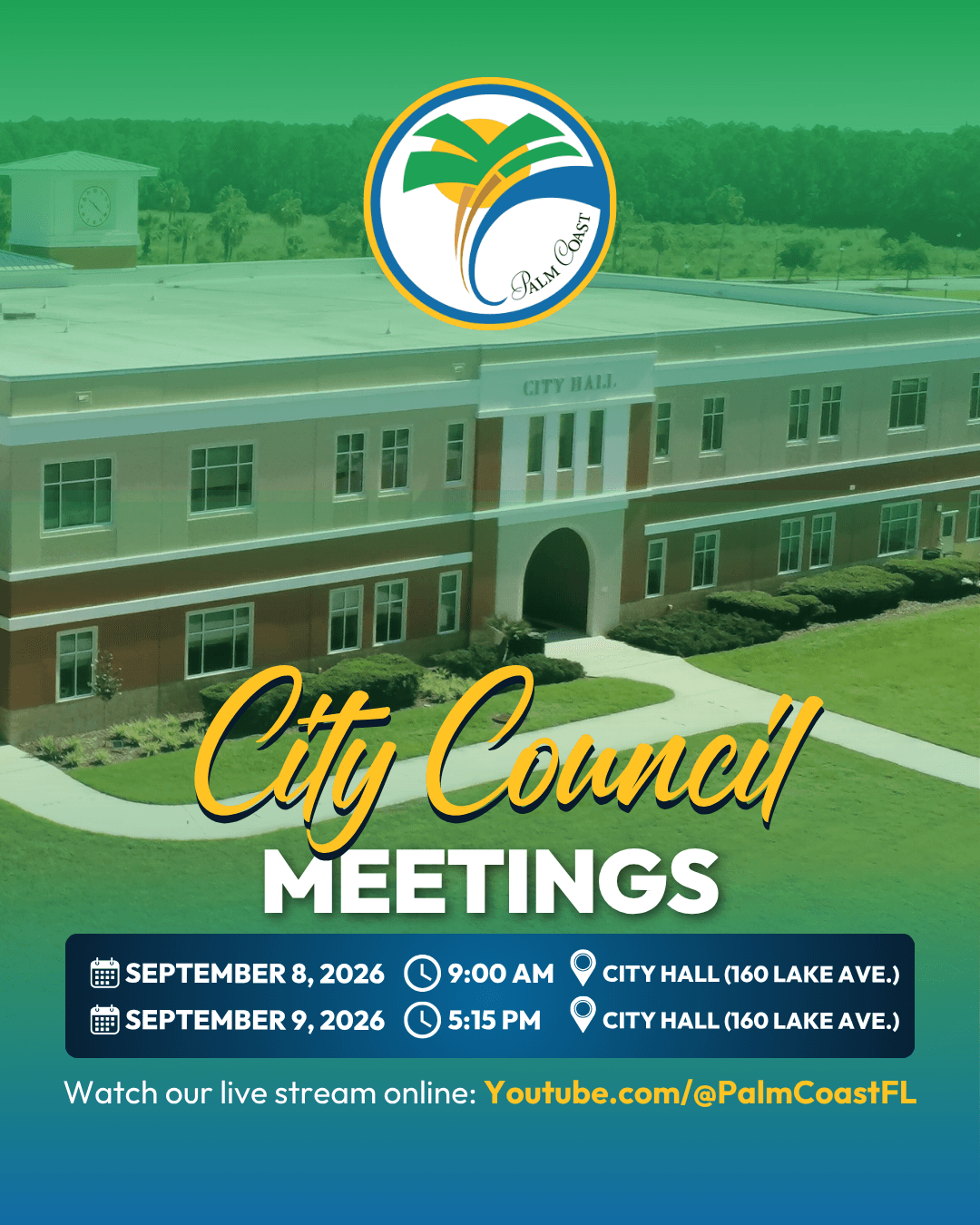
Palm Coast's Community Development Department will unveil proposed amendments to the city's Land Development Code at a City Council workshop Tuesday morning, the culmination of a year-long process to align zoning rules and development procedures with the municipality's newly adopted Comprehensive Plan. The changes, scheduled for presentation September 8 at 9:00 a. m., follow a series of public workshops with the Beautification and Environmental Advisory Committee, the Planning and Land Development Regulation Board, and City Council.
The proposed code rewrite updates zoning classifications, land uses, development procedures, and other regulatory standards to match the policy direction set by the Comprehensive Plan and incorporate feedback City Council provided during a June 9 workshop. For property owners, developers, and neighbors throughout Palm Coast, the amendments will define what can be built where—and how—for years to come.
What's happening
The Community Development Department is presenting the Land Development Code amendments at the City Council Workshop Meeting on Tuesday, September 8, 2026, at 9:00 a. m. According to the city's public notice, the update follows adoption of the city's Comprehensive Plan and a series of public workshops held with the Beautification and Environmental Advisory Committee, Planning and Land Development Regulation Board, and City Council.
The proposed amendments update zoning, land uses, development procedures, and other standards to align the code with the Comprehensive Plan. The revisions also incorporate direction City Council provided during its June 9 workshop. The notice does not detail specific parcels, map changes, or dollar figures associated with the code rewrite.
Also on the September 8 workshop agenda, the Community Development Department will present a resolution amending policies related to the State Housing Initiatives Partnership (SHIP) program, including purchase assistance for first-time homebuyers and support for affordable rental development. SHIP provides funding to help income-eligible residents with housing costs such as down payments and closing costs and can also support the development or rehabilitation of affordable rental housing. The proposed changes are intended to give the city greater flexibility in addressing local housing needs while maintaining compliance with state program requirements.
Two additional items will be presented: an ordinance providing additional protection against the transfer or dissolution of the Palm Coast Fire Department, requiring a supermajority vote before a proposal to dissolve the department could advance to a public referendum; and an ordinance prohibiting direct potable reuse within the City of Palm Coast Utility system. Direct potable reuse involves highly treated wastewater undergoing advanced purification before being introduced into a drinking water supply.
The following day, Wednesday, September 9, 2026, at 5:15 p. m., City Council will hold a public hearing on the proposed Fiscal Year 2027 budget. The Finance Department will present a resolution setting the tentative property tax rate for Fiscal Year 2027 at 4. 1387 mills, equal to the city's calculated rolled-back rate. The rolled-back rate generates the exact same amount of property tax revenue as the previous year, using current property values and excluding new construction.
Why the Land Development Code matters for property owners
A city's Land Development Code is the rulebook that governs what can be built on every parcel within municipal limits. It sets permitted uses by zoning district—whether a lot can host a single-family home, duplex, townhouse, apartment building, retail storefront, or warehouse. It prescribes setbacks, lot coverage, building height, parking requirements, landscaping buffers, and the procedures developers and homeowners must follow to win approval.
When a Land Development Code is rewritten to align with a new Comprehensive Plan, property owners may see changes to what is allowed on their land or their neighbor's land. A parcel previously zoned for single-family homes might become eligible for townhomes or mixed-use development if the Comprehensive Plan calls for higher density in that corridor. Conversely, areas the Plan designates for conservation or lower intensity may see stricter limits on subdivision or clearing.
For homeowners, the code shapes the character of their neighborhood: the scale of new construction next door, the width of the street trees and sidewalks, whether a corner lot can become a convenience store. For builders and developers, it determines project feasibility—whether a site pencils out for apartments, how many units fit, and how long the approval process will take. Because the amendments coming to Palm Coast incorporate Council direction from earlier workshops, they also reflect the policy priorities elected officials heard from residents during those public sessions.
Impact on development timelines and procedures
One of the stated goals of the code update is to revise development procedures. In practice, this can mean streamlining approvals for projects that match Comprehensive Plan goals—shortening review timelines, consolidating steps, or shifting certain decisions from full Council hearings to staff or board level—or adding review layers for proposals that require greater scrutiny.
Florida's Comprehensive Plan framework, established under state growth-management law, requires that a city's Land Development Code be consistent with its Comprehensive Plan. Once the Plan is adopted, the code must be updated to implement it. Projects submitted under the old code may be grandfathered or required to conform to new standards depending on how far along they are in the approval process; the specifics are typically spelled out in the ordinance's effective-date and transition provisions.
For applicants in the pipeline—developers with sketch-plan approvals, site-plan reviews underway, or rezonings pending—the timing of the code adoption and the transition rules will determine which standards apply. That question often hinges on whether a complete application was submitted before or after the effective date of the new code.
Affordable housing and SHIP funding flexibility
The simultaneous presentation of SHIP program amendments signals that housing affordability remains a policy focus in Palm Coast. SHIP funds, distributed by the state to local governments based on population, can be used for down-payment assistance, closing-cost grants, and rehabilitation of owner-occupied or rental housing for income-eligible households.
By amending local SHIP policies to provide greater flexibility, the city is positioning itself to direct those dollars toward the housing types and assistance models it deems most effective. That could mean shifting more funding toward rental development in a tight rental market, increasing purchase-assistance grants to help first-time buyers compete, or adjusting income thresholds and award caps. The state sets the outer boundaries of eligible uses, but local policies determine priorities within that envelope.
Affordable housing advocates and developers often watch SHIP policy changes closely. An increase in maximum assistance amounts can make more households eligible; expanding support for rental development can unlock financing for workforce-housing projects that pencil only with subsidy. Conversely, tighter restrictions or reallocation of funds can slow project pipelines.
What happens next
The September 8 workshop is a presentation and discussion session. City Council workshops in Florida are public meetings where officials receive briefing and provide direction to staff but typically do not vote. Formal adoption of the Land Development Code amendments and the SHIP policy changes would occur at subsequent public hearings, following the noticing and procedural requirements set by state law and the city's charter.
Residents are encouraged to attend the workshop in person at City Hall or watch the live stream on the city's YouTube channel. Public comments will be opened at the beginning and end of the workshop in accordance with Florida Statutes; each speaker may speak for up to three minutes, and public comments on non-agenda items are limited to 30 minutes at the beginning and end of each meeting.
The September 9 budget hearing at 5:15 p. m. will include a resolution setting the tentative millage rate at 4. 1387 mills—the rolled-back rate that generates the same revenue as the prior year—and a resolution establishing the tentative Fiscal Year 2027 budget. If approved, the final public hearing on the millage rate and budget is scheduled for September 23 at 5:15 p. m.
Meeting agendas for all public meetings are posted in advance on the city's website. Residents seeking more information can contact the City Clerk's Office at 386-986-3713.
Palm Coast's growth and the push to update codes
Palm Coast, a planned community incorporated in 1999, has grown rapidly over the past two decades, adding residential subdivisions, commercial corridors along State Road 100 and Palm Coast Parkway, and industrial development near Interstate 95. The city's population growth and annexation of previously unincorporated Flagler County land have driven periodic updates to the Comprehensive Plan, each followed by the need to bring the Land Development Code into conformance.
Across Northeast Florida, municipalities are grappling with the same challenge: growth pressures that outpace the regulatory frameworks written for smaller, slower-growing communities. In Palm Coast, the tension plays out in debates over density, tree preservation, stormwater management, and the balance between new development and the semi-rural character that attracted many residents in the first place. The Land Development Code is where those policy choices become concrete rules, and this week's workshop will offer the public its first detailed look at how the city intends to manage growth in the years ahead.