Palm Coast council to weigh 318-home expansion in Seminole Trace
A proposed land-use change for more than 330 acres would bring 743 homes instead of 416 to the Seminole Trace area, with conservation zones reorganized as part of the master-planned development.
The Palm Coast City Council will consider more than doubling the number of homes allowed on a 331-acre tract in the Seminole Trace area when it holds its first reading of a pair of linked ordinances Tuesday evening, part of a busy development agenda that also includes changes to two other master-planned communities in the Flagler County city.
The proposed Future Land Use Map amendment and rezoning would increase the maximum number of dwelling units from 416 to 743—a gain of 327 homes—while reorganizing where conservation and residential areas sit within the property. The ordinances, scheduled for first reading at the Oct. 6 business meeting, would rezone the land from Single Family Residential-1 and Preservation to Master Planned Development with a Development Agreement.
What's on the table
According to the meeting agenda published by the City of Palm Coast, the Seminole Trace proposal involves 331. 1 acres and seeks to amend both the city's Future Land Use Map and the zoning map. The land-use amendment would boost the dwelling-unit cap from 416 to 734 homes (the agenda cites both 734 and 743 in different sections; the higher figure appears in the rezoning ordinance description) and would rearrange the boundaries of residential and conservation areas within the tract.
The current zoning designations—Single Family Residential-1 (SFR-1) and Preservation (PRS)—would be replaced with Master Planned Development (MPD) zoning governed by a Development Agreement, a binding contract between the developer and the city that sets detailed rules for phasing, design, infrastructure, open space, and other project features.
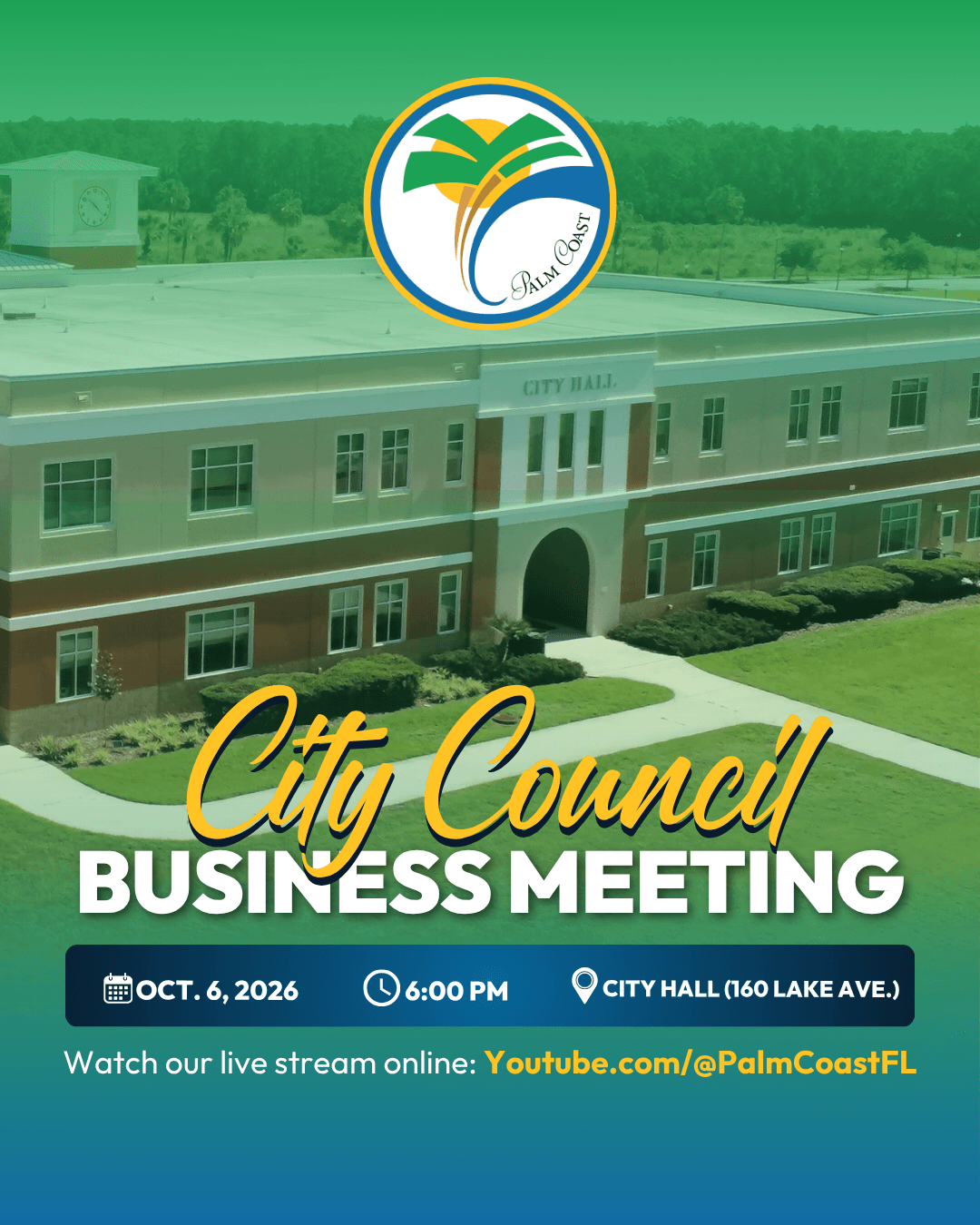
Both ordinances are on Tuesday's agenda for first reading. Under Palm Coast's legislative process, an ordinance typically requires two public readings by the City Council before adoption, with the second reading and final vote coming at a later meeting. The Oct. 6 session begins at 6 p. m. at City Hall and will be streamed live on the city's YouTube channel; public comment will be taken at the beginning and end of the meeting, with each speaker allowed up to three minutes.
The Seminole Trace items are part of a broader development docket that includes amendments to the Magnolia Trace and Red Mill Pointe master-planned communities, updates to the city's land-development code, and a new historic-preservation ordinance.
How it would reshape the area
The 327-home increase—roughly a 76 percent jump from the original cap—would make Seminole Trace one of the larger residential expansions moving through Palm Coast's approval pipeline this year. Master-planned developments of this scale in Florida are typically built out in multiple phases over several years, with infrastructure such as roads, stormwater systems, and utilities extended incrementally as sections are completed.
The reorganization of conservation and residential areas means that wetlands, uplands, or other environmentally sensitive lands designated for preservation under the original plan would shift location within the 331 acres. In Florida, master-planned developments often cluster homes on suitable uplands and set aside wetlands, floodplains, or wildlife corridors as permanent conservation tracts. The specific acreage and location of the revised conservation zones are detailed in the Development Agreement, which becomes a public record once the council acts.
Projects of this size in Palm Coast typically trigger review for consistency with the city's Comprehensive Plan, including concurrency requirements—Florida's system for ensuring that roads, drainage, parks, and other public facilities have capacity to serve new development before building permits are issued. Stormwater management is a particular focus in Flagler County, where most development drains toward the Intracoastal Waterway or tributaries of the Matanzas River; large subdivisions are required to build retention or detention ponds that meet St. Johns River Water Management District (SJRWMD) standards for water quality and flood control.
What it means for traffic, schools, and services
An additional 327 homes would add daily vehicle trips to the local road network, with the impact depending on which arterials serve the site. Palm Coast's grid of parkways and connector roads was designed to accommodate suburban growth, but specific intersections and segments are monitored for level-of-service standards under the city's transportation concurrency system. The Development Agreement may require the developer to build turn lanes, signalization, or other road improvements, or to contribute impact fees toward off-site upgrades—details that become public when the agreement is posted with the ordinance.
School capacity is another dimension. Flagler County Schools, which serves Palm Coast, has opened several new campuses in recent years to keep pace with residential growth; the district collects school impact fees on new homes to help fund classroom seats, though the timing of new facilities often lags rooftop construction. The Seminole Trace expansion would generate students across elementary, middle, and high-school grades; families shopping for homes in Palm Coast frequently cite school quality and capacity as decision factors, and the district publishes annual enrollment projections and capital plans that reflect anticipated development.
Utility service—water, sewer, and stormwater—will be provided by the city. Palm Coast operates its own water and wastewater systems, separate from JEA (which serves most of Duval County to the north). Large residential projects typically require the developer to extend water and sewer mains to the site and build the internal distribution network, then dedicate the infrastructure to the city upon completion. The Tuesday agenda also includes several utility items, among them a wastewater-residuals management contract and a lift-station conversion project, reflecting the ongoing capital demands of a growing service area.
What neighboring projects are in motion
Tuesday's first-reading docket includes two other master-planned-development amendments that illustrate the pace and variety of change in Palm Coast's residential market.
Magnolia Trace, an existing MPD, is asking to add 4. 41 acres, cut the total home count from 754 to 624, and reorganize land-use areas and access points. The reduction in units may reflect market repositioning or environmental constraints discovered during engineering.
Red Mill Pointe is seeking to shift from 216 multifamily rental units—already approved under MFR-1 zoning—to 216 fee-simple townhouses, which are individually owned. The proposed MPD Development Agreement would govern three construction phases, an amenity center, a public dog park, on-street guest parking, and lot sizes and setbacks smaller than the standard code allows. The switch from rental apartments to for-sale townhomes changes the project's financing, property-tax implications, and buyer profile, and reflects a broader regional trend toward attached for-sale housing as land costs rise.
All three projects—Seminole Trace, Magnolia Trace, and Red Mill Pointe—will receive first-reading votes Tuesday; none will be final until second reading.
What happens next
The Oct. 6 City Council business meeting begins at 6 p. m. at Palm Coast City Hall, 160 Lake Avenue. Proclamations recognizing Disability Employment Awareness Month, Fire Prevention Week, and other observances will start at 5:30 p. m. The full agenda, including staff reports and exhibits for the Seminole Trace ordinances, is posted on the city's website at palmcoastgov. com.
Public comment on non-agenda items will be taken at the opening and close of the meeting, limited to 30 minutes per segment, with individual speakers allowed three minutes each. Residents may also submit written comments to the City Clerk's Office in advance.
Following first reading, the Seminole Trace land-use amendment and rezoning will return to the council for second reading and a final vote at a future business meeting, typically two to four weeks later. If both ordinances are adopted, the Development Agreement becomes effective and the applicant may proceed with engineering and permitting for infrastructure and the first phase of homes.
The convergence of Seminole Trace, Magnolia Trace, and Red Mill Pointe on a single agenda underscores the steady drumbeat of residential growth in Palm Coast and Flagler County, part of the broader Northeast Florida expansion driven by affordability, coastal proximity, and migration from higher-cost metro areas. How the city manages the pace, design, and infrastructure burden of that growth—through tools such as master-planned-development agreements, concurrency standards, and conservation set-asides—will shape the community's character and livability for decades.
Sources
- City of Palm Coast: City Council Business Meeting on Tuesday, October 6, 2026, at 6:00 p. m.