
Creekside High students tour St. Johns wastewater plant as county pushes STEM careers
Students from the Environmental Sciences and Engineering Academy visited the Northwest Wastewater Reclamation Facility to see how treated water reduces demand on aquifers.
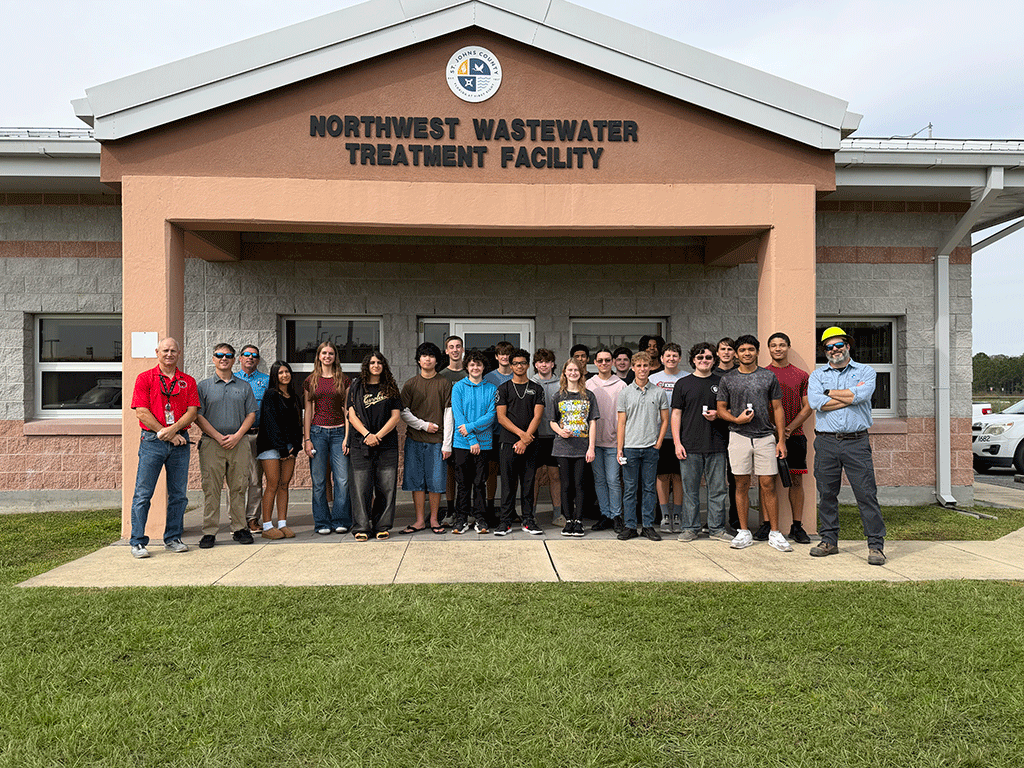
St. Johns County Utilities opened the doors of its Northwest Wastewater Reclamation Facility to Creekside High School students on November 12, giving a group from the school's Environmental Sciences and Engineering Academy a firsthand look at how the county turns wastewater into irrigation water and the technology behind protecting groundwater supplies.
The tour, led by county environmental and operations staff, was designed to connect classroom lessons in environmental science and engineering with the infrastructure that serves one of Florida's fastest-growing counties—and to spark interest in careers that keep water flowing as the population climbs.
What happened at the facility
Tony Cubbedge, St. Johns County Utilities Environmental Division Manager, and Cori Heddings, a plant operator, guided the Creekside students through the treatment process at the Northwest Wastewater Reclamation Facility. The students interacted with plant operators, asked questions about how wastewater is treated, and learned how the facility produces reclaimed water used for landscape irrigation across the county.
The tour took place on November 12, 2026. Cubbedge explained that the experience was intended to help students "better understand the science and technology behind wastewater treatment and the importance of responsible water management," according to the county's announcement.
The county said the educational visit supports goals outlined in the St. Johns County Strategic Plan, including enhancing conservation, strengthening community partnerships, and encouraging career exploration through educational outreach.
Why reclaimed water matters in St. Johns County
Reclaimed water—treated wastewater that meets state standards for reuse—is a cornerstone of water conservation strategy in fast-growing St. Johns County. The county has consistently ranked among Florida's fastest-growing by population, adding thousands of new homes each year in master-planned communities such as Nocatee, SilverLeaf, and developments along the CR 210 and SR 16 corridors.
Every gallon of reclaimed water used for irrigation is a gallon of groundwater that stays in the aquifer. In Florida, landscape irrigation is one of the largest components of residential and commercial water demand, and utilities across the state have invested heavily in purple-pipe reclaimed-water systems to offset potable withdrawals.
St. Johns County draws its drinking water from the Floridan Aquifer, a critical resource that also supplies neighboring counties and supports the ecology of springs and the St. Johns River. As development accelerates, the St. Johns River Water Management District—which issues consumptive-use permits—scrutinizes new large withdrawals. Reclaimed water helps utilities meet new demand without seeking larger aquifer allocations.
The Northwest Wastewater Reclamation Facility is one of several treatment plants operated by St. Johns County Utilities that serve unincorporated areas of the county. The utility's service area has expanded alongside residential growth, requiring ongoing capital investment in treatment capacity, collection lines, and reclaimed-water distribution networks.
The push to fill water-industry jobs
Utilities across Northeast Florida face a chronic challenge: an aging workforce and a shortage of operators, engineers, and technicians trained to run increasingly sophisticated treatment plants. Wastewater treatment requires state certification, and operators must understand chemistry, biology, hydraulics, and industrial controls.
Tours like the one Creekside students experienced are part of a broader effort by local governments to build a pipeline of talent. St. Johns County Utilities, JEA in Jacksonville, and Clay County Utility Authority have all partnered with area high schools, vocational programs, and State College of Florida campuses to introduce students to water and wastewater careers.
Cubbedge's remarks to the students emphasized this workforce dimension: "We hope experiences like this inspire students to explore careers in the water industry and recognize the role they can play in protecting our natural resources. "
Water-sector jobs typically offer stable pay, benefits, and the opportunity to work in an essential service that cannot be outsourced or automated away. Entry-level operator positions often require only a high-school diploma and willingness to pursue certification, though engineering roles demand a four-year degree.
For students at Creekside High School—a top-ranked institution in Fruit Cove that serves families throughout southwest St. Johns County—exposure to these career pathways complements the school's Environmental Sciences and Engineering Academy curriculum. The academy is one of several career-themed academies at Creekside, designed to give students hands-on context for science, technology, engineering, and math coursework.
Infrastructure and education in a growth corridor
Creekside High School sits in the heart of St. Johns County's residential growth engine. The school, which opened in 2004, serves neighborhoods along Race Track Road and County Road 13, areas that have seen wave after wave of subdivision approvals over the past two decades.
As enrollment in St. Johns County schools has climbed, the district has repeatedly opened new schools and expanded campuses to keep pace with rooftops. The county's reputation for highly rated schools is itself a driver of in-migration, creating a feedback loop: families move in for the schools, requiring more infrastructure, which in turn supports more development.
The tour underscores a practical reality: the students learning about wastewater treatment today are living in the communities that depend on it—and some may end up designing, building, or operating the next generation of facilities needed to serve continued growth.
St. Johns County Utilities thanked Creekside High School for participating as a business partner and expressed hope that the tour would help students appreciate "the important work being done to protect the County's water resources for future generations. "
What comes next
The November 12 tour was a one-time educational event, and the county did not announce plans for additional school visits in its release. Interested schools or student groups typically coordinate facility tours through the utility's public affairs or environmental staff.
St. Johns County Utilities continues to expand its infrastructure to meet growth. The county's capital improvement program includes ongoing projects to increase treatment capacity, extend sewer service to areas still on septic systems, and build out reclaimed-water networks. Details on upcoming projects and service-area expansions are available through the county's Utilities Department and in budget documents presented to the Board of County Commissioners.
For students considering water-industry careers, state certification as a wastewater operator is administered by the Florida Department of Environmental Protection. Community colleges in the region, including St. Johns River State College, offer courses that prepare candidates for the licensure exams.
As Northeast Florida's population continues to grow—St. Johns County alone is projected to add tens of thousands of residents over the next decade—the region's ability to train and retain skilled utility workers will shape how well local governments can deliver safe, reliable water and wastewater service. Tours like the one at the Northwest Wastewater Reclamation Facility are a small but tangible piece of that long-term workforce puzzle.