
Palm Coast approves 35-year YMCA lease to anchor Town Center expansion
A 46,300-square-foot recreation facility with dual pools and a wellness center is slated for City-owned land on Central Avenue, with construction targeting late 2026 and a $14 million price tag.
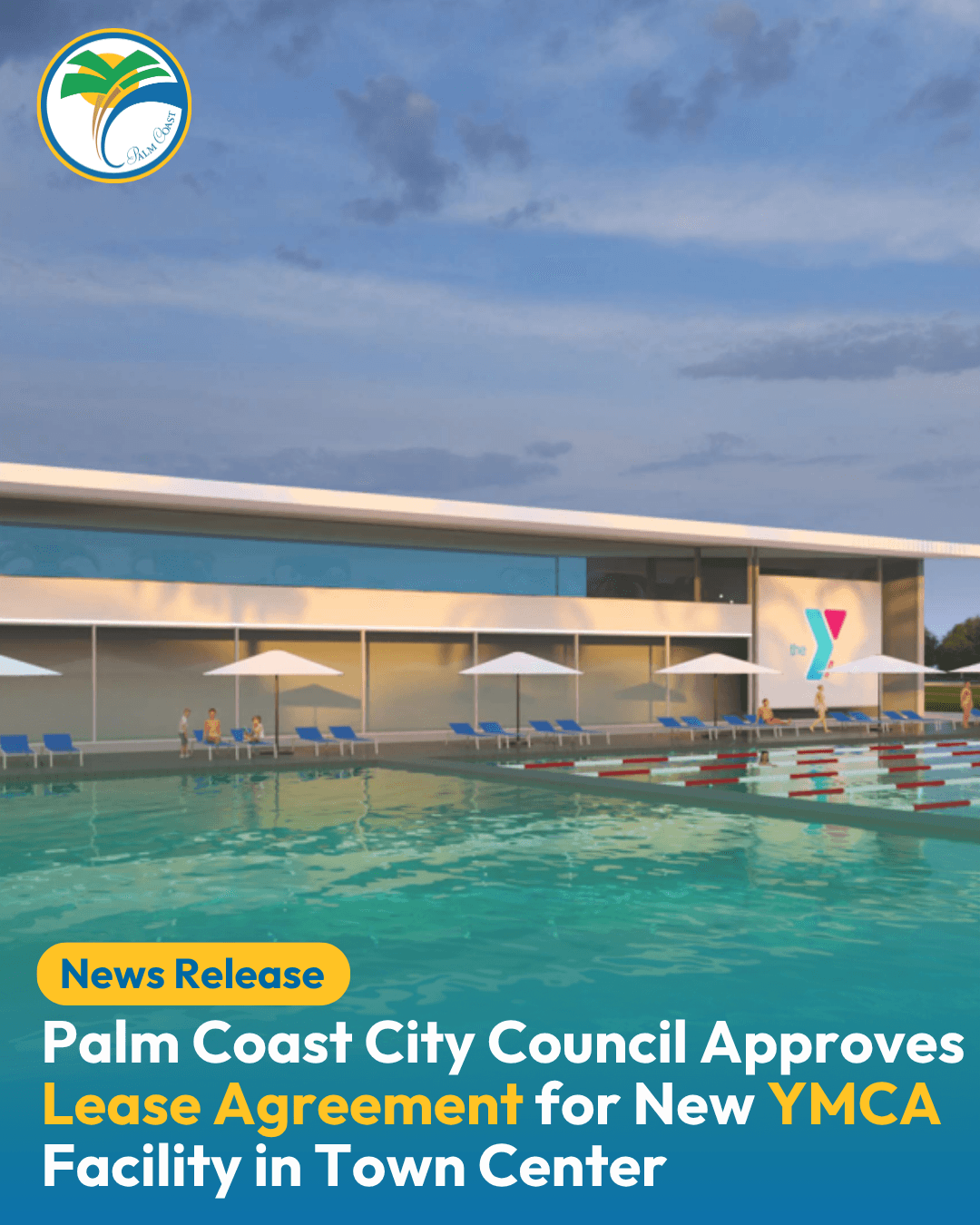
Palm Coast's Town Center is set to gain a major recreation anchor after the City Council approved a 35-year lease agreement with the Volusia Flagler Family YMCA on October 20. The deal clears the way for construction of a 46,300-square-foot facility on City-owned land at 1580 Central Avenue, where the YMCA plans to build a multi-generational recreation hub featuring two pools, a wellness center, gymnasium, and childcare areas.
The project represents one of the largest public-private partnerships in Palm Coast's recent history and is designed to fill a longstanding gap in community recreation infrastructure as the City's population approaches 100,000 residents. Construction is targeted to begin in late 2026, with completion anticipated in winter 2029.
What's happening
The City Council's approval establishes a 35-year lease for the City-owned parcel at 1580 Central Avenue in the Town Center. The Volusia Flagler Family YMCA will construct and operate the new facility on the site.
The planned building will span approximately 46,300 square feet and is expected to include a 50-meter swimming pool, a separate family pool, a wellness center, gymnasium space, childcare areas, locker rooms, and additional amenities designed to serve residents of all ages.
The project carries an estimated $14 million price tag. Funding is expected to come from multiple sources: the YMCA organization itself, the City of Palm Coast, Flagler Schools, state appropriations, private contributions, fundraising efforts, and other community partners.
"I'd also like the residents to know that this project has state involvement, school involvement, YMCA involvement, and the City's involvement in helping us get this done," Palm Coast Mayor Mike Norris said during the October 20 meeting. "The community needs this. I think it's going to enhance Town Center tremendously. "
The facility is expected to provide resources for local youth and school athletic programs, including competitive swimming and aquatic activities. The project timeline targets construction beginning in late 2026, with completion in winter 2029, subject to financing, permitting, and other project requirements.
What the facility means for Palm Coast residents
For a city that has grown rapidly over the past two decades—Palm Coast is now Florida's 44th-largest city and one of Flagler County's dominant population centers—the YMCA facility addresses a persistent community need for comprehensive recreation programming. The facility is designed to serve residents of all ages, from toddlers in childcare to seniors seeking wellness activities.
The 50-meter pool is a competitive-length facility, which typically serves both lap swimmers and organized swim teams. Competitive aquatic facilities of this scale are uncommon in communities of Palm Coast's size and could draw regional swim meets and training camps, potentially boosting hotel occupancy and restaurant traffic in Town Center.
The family pool component suggests programming oriented toward recreational swim lessons, water aerobics, and open swim—activities that typically require pre-registration or memberships. How the YMCA structures membership fees and whether it offers income-based sliding scales will determine how broadly accessible the facility is to Palm Coast households across the economic spectrum. The YMCA network nationally operates on a model that includes financial assistance programs, though specific pricing and assistance terms for the Palm Coast location have not been disclosed.
The childcare component is particularly relevant in a region where working families often face waitlists for licensed care. If the YMCA offers drop-in childcare during workout hours—a common feature at YMCA wellness centers—it could ease a pinch point for parents trying to maintain fitness routines.
Impact on Town Center and nearby property
The YMCA's placement at 1580 Central Avenue positions the facility at the heart of Palm Coast's planned mixed-use Town Center district, a long-evolving effort to create a walkable downtown core. Town Center has added retail, dining, and municipal uses over the past decade, but has lacked the steady foot traffic and evening activity that successful town centers generate.
A recreation facility with daily programming and staggered class schedules can function as a traffic generator, bringing residents to the area multiple times per week rather than for occasional errands. Gyms, pools, and childcare typically drive morning, midday, and early-evening visits—patterns that complement rather than compete with retail and restaurant hours.
That consistent activity could make adjacent commercial parcels more attractive to developers and tenants. Restaurants and service businesses—coffee shops, juice bars, physical therapy clinics, athletic-gear retailers—often cluster near fitness facilities because of the built-in customer base. Property owners and brokers in Town Center will be watching lease comps and absorption rates in the quarters following the YMCA's opening.
For nearby residential neighborhoods, the facility may influence home values, particularly for families prioritizing recreation access and school-affiliated programming. Proximity to amenities like pools and gyms is a common search filter for home buyers, and the YMCA's partnership with Flagler Schools suggests potential tie-ins with school athletics that could appeal to families with student athletes.
School partnership and youth programming
Flagler Schools' involvement as a funding partner points to a shared-use model that is increasingly common in Florida, where districts and municipalities co-invest in facilities that serve both student athletes and the general public. The 50-meter pool is a strong indicator of competitive swimming use; high school and club swim teams require this length for meets sanctioned by governing bodies.
Flagler County high schools currently lack a district-owned competitive aquatics facility, so swim teams typically practice and compete at private or municipal pools under lease or use agreements. A dedicated 50-meter pool with starting blocks, timing systems, and spectator areas would provide a home venue for high school swim and potentially water polo programs, eliminating travel for home meets and reducing scheduling conflicts that arise when multiple teams share a single pool.
The YMCA's youth programming could also extend to before- and after-school care, summer camps, and sports leagues—services that often fill gaps for working parents when school is not in session. How much capacity the facility dedicates to school-affiliated versus general-public programming will shape demand patterns and membership availability, particularly during the school year.
What happens next
With the lease agreement approved, the City of Palm Coast and the Volusia Flagler Family YMCA will move forward with the steps required to advance the project toward construction. The late-2026 construction start target means site preparation, permitting, and final design work must proceed on an aggressive timeline.
In Florida, a project of this scale typically requires site plan approval, building permits from the local building department, stormwater management review, and potentially environmental review depending on site conditions. Because the parcel is City-owned land in an established Town Center district, some entitlements may already be in place or streamlined, but the public will have opportunities to review site plans and construction drawings as they move through the approval process.
Financing remains a critical path item. The $14 million budget draws on multiple sources—YMCA capital funds, City contributions, Flagler Schools, state appropriations, private donations, and fundraising. State appropriations often flow through the annual legislative budget cycle, so the project's ability to meet the late-2026 construction start may depend on securing those funds during the 2027 legislative session or confirming commitments already made. Fundraising campaigns for capital projects of this type often unfold publicly, with donor recognition and naming-rights opportunities; residents can expect to see campaign announcements in the coming months.
The winter-2029 completion target implies roughly a two-year construction window, which is consistent with recreation facilities of this size and complexity. Pool construction in particular involves specialized trades, structural requirements for water containment, and extensive mechanical and filtration systems, all of which add time and cost relative to standard commercial buildings.
The City has encouraged residents to stay informed by following official channels on social media and subscribing to updates at palmcoastgov. com. Public meetings related to site plans, design reviews, or budget amendments tied to the project would be noticed in advance and open to public comment under Florida's Government in the Sunshine laws.
A broader buildout strategy
The YMCA project fits into a wider pattern across Northeast Florida, where municipalities are leveraging public land and partnerships to catalyze mixed-use development in designated growth areas. Flagler County has seen rapid residential growth—particularly in Palm Coast and along the SR 100 and Old Kings Road corridors—but commercial and civic amenities have lagged behind rooftop counts, a common dynamic in fast-growing exurban markets.
Town centers and village cores are policy responses to that imbalance, aiming to concentrate jobs, services, and gathering spaces in walkable districts rather than dispersing them along commercial strips. The YMCA lease represents a bet that a major community-serving anchor can pull future private investment to adjacent parcels, accelerating the buildout of a true downtown. Whether that strategy succeeds in Palm Coast will depend on factors beyond the YMCA alone—commercial zoning, parking policy, streetscape design, and the willingness of retail and office tenants to locate in a still-emerging district.
For now, the 35-year lease and $14 million investment signal that multiple public and nonprofit partners are committed to the vision. Residents, developers, and neighboring property owners will be watching construction milestones and membership trends closely as the project moves from paper to pavement.